
How Much Space Do You Need for a Backyard Putting Green?
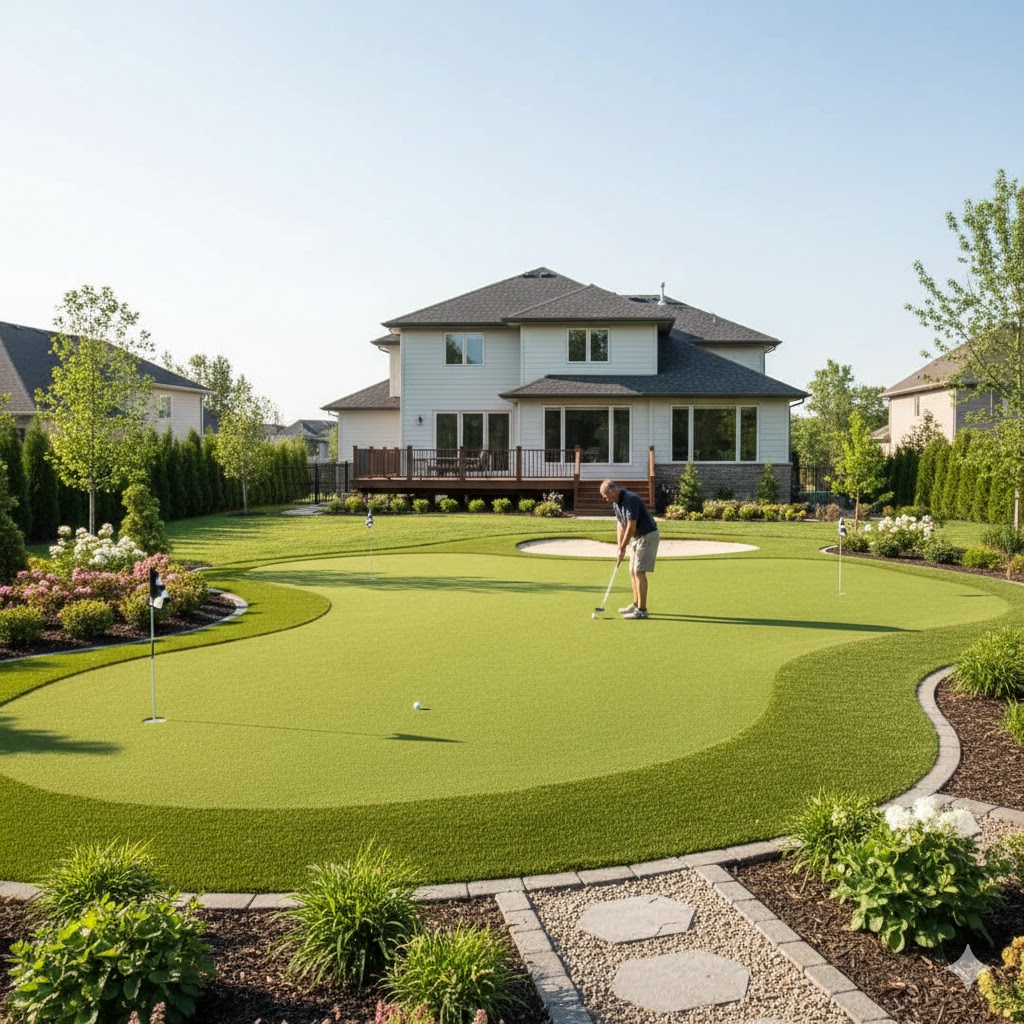
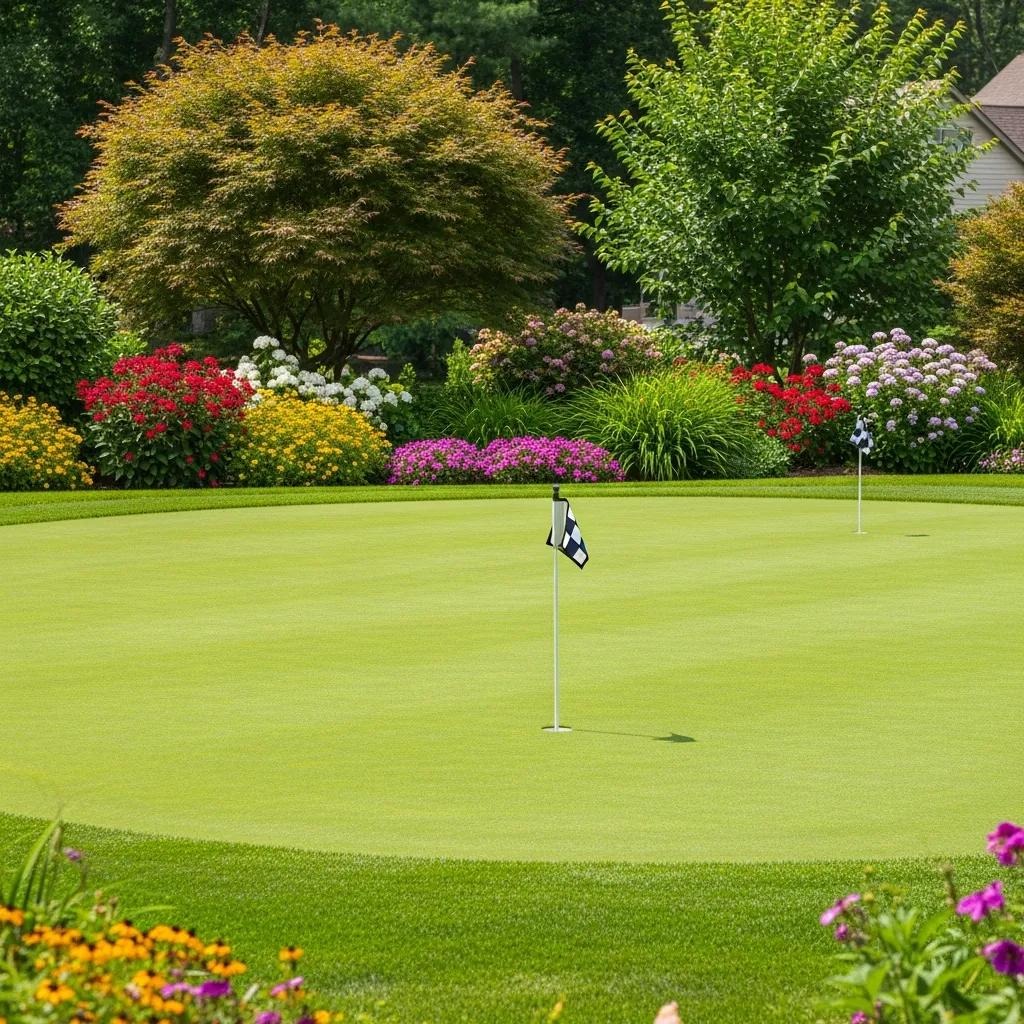
A backyard putting green is a dedicated turf surface for practicing putts and short-game shots — and when it’s sized right it improves practice and elevates your yard. This guide walks through how square footage, layout, and features affect playability for beginners through advanced players, and it gives realistic size recommendations for both homes and commercial sites. You’ll find clear size tiers, the trade-offs of compact footprints, which design choices change usable area, and practical maintenance tips that keep ball roll consistent. Ready to explore options for your property? Synthetic Grass DFW offers free consultations and custom quotes — call (972) 373-4196 for a no-obligation estimate. The guide covers ideal dimensions by skill level, differences for commercial installs, key design drivers, how to assess your yard, DFW cost considerations, and maintenance so you can plan a green that fits your goals and budget.
Ideal Backyard Putting Green Dimensions by Skill Level
How big your green should be depends on your skill level, practice goals, and the space you have. Size dictates how many holes you can include, how many different breaks you can practice, and how realistic the surface feels. Beginners get excellent value from a compact surface focused on short putts and alignment work, while intermediate and advanced players benefit from larger greens with contours and multiple hole positions. We break sizes into tiers — small for efficient repetition, medium for a balance of features and footprint, and large for full short-game variety. The table below matches common tiers to suggested square footage and typical hole counts so you can pick the right option for your yard.
| Size Tier | Typical Square Footage | Suggested Hole Count / Use Case |
|---|---|---|
| Small putting green | 50–200 sq ft | 1 hole; alignment and short-putt practice |
| Medium residential green | 300–500 sq ft | 2–4 holes; varied lengths and moderate contours |
| Large residential green | 500–1,500+ sq ft | 4+ holes; realistic contouring, fringe, chipping zones |
This tiered overview shows how square footage maps to practice capability and hole count. Read on for minimums and typical layouts for each tier.
Minimum Space for a Small Putting Green
You can build a useful single-hole practice green in about 50–100 sq ft when the focus is short-putt repetition and alignment. This footprint usually fits a 12–18″ cup, a small circular putting surface, and a short approach — enough for basic drills but limited in break variety and long putt practice. The trade-off: compact greens make the most of tight yards but reduce realistic reads, so aim for a flat, well-finished edge to keep ball roll consistent. Want more variety without much more space? Consider modular fringe pieces or a slightly stretched 6′ × 12′ rectangle to add a second hole and more play lines.
Next, we’ll cover how medium and large residential greens expand practice options and features.
Space Needs for Medium and Large Residential Greens

Medium residential greens, typically 300–500 sq ft, give room for several hole locations, light shaping, and a fringe that improves approach practice and realism. In this size you can place 2–4 holes 10–20 feet apart, add gentle undulations, and leave access space for edging and maintenance so players can work on speed control and breaking putts. Large residential greens usually exceed 500 sq ft and can grow past 1,000 sq ft when you include bunkers, chipping zones, and multi-hole play — ideal for advanced drills and social use. Choosing between medium and large depends on your yard, desired features, and whether the green is mainly for serious practice or also for entertaining guests.
With size tiers set, it’s helpful to compare how commercial putting greens differ from residential installs and how scale changes priorities and ROI.
How Commercial Putting Green Space Needs Differ from Residential

Commercial greens emphasize durability, accessibility, and multi-user flow more than private residential greens. That means space planning must consider heavier foot traffic, ADA access, and supporting amenities. Hotels, retail centers, and office campuses often use larger footprints so multiple users can play, events can be staged, and sightlines invite engagement — which also requires a robust sub-base and drainage. Commercial green size ties directly to amenity-driven ROI: bigger, feature-rich greens can draw customers or tenants, host events, and support branding. The table below links common commercial use cases to typical square footage bands and design priorities so property owners can match size with goals.
| Commercial Use Case | Typical Sq Ft Range | Design priorities / ROI considerations |
|---|---|---|
| Hotel or resort green | 1,000–5,000 sq ft | Guest experience, event staging, aesthetics |
| Office campus amenity | 500–2,500 sq ft | Employee engagement, branding, low maintenance |
| Retail/entertainment activation | 500–3,000 sq ft | Foot traffic flow, durability, promotional use |
Commercial projects usually scale up to support concurrent users and marketing impact, which affects construction choices and lifecycle costs.
Typical Commercial Putting Green Sizes in DFW
In the Dallas–Fort Worth area, commercial greens commonly range from compact 500 sq ft activations for plazas up to several thousand square feet for resort-style amenities. Smaller commercial greens act as engagement points in courtyards and prioritize durability and clear circulation, while larger installs add lighting, seating, and event space to extend usable hours and revenue potential. Plan for circulation, emergency access, and maintenance paths early — these elements grow with scale and impact operational costs. Addressing those site constraints up front helps ensure the green meets both functional and financial objectives in DFW.
How Space Affects Design and ROI for Commercial Greens
More space lets you add features — extra holes, complex contours, spectator zones — that boost perceived amenity value and measurable engagement. When a green supports events, larger footprints improve circulation and safety buffers, which lowers wear and long-term maintenance cost per square foot. Operational factors like maintenance frequency, turf replacement cycles, and repair access influence ROI more than size alone, so a thoughtfully designed medium-sized green using quality materials can outperform a larger, poorly built one. Balance initial construction cost against long-term operating savings and amenity-driven revenue when choosing size.
Next, we’ll look at the specific design features that have the biggest impact on footprint and usability for a backyard putting green.
Design Features That Change the Space Required for a Backyard Putting Green
Shape, contours, hole count, and added practice elements all change the functional footprint of a green. Contours create realistic breaks but need buffer zones to preserve consistent ball paths and keep balls from rolling off the turf. Multiple holes require separation so practice lines don’t interfere with each other. Chipping pads, approach zones, and sand bunkers increase training value but add construction complexity and drainage needs. Below are common features that drive footprint and guidance for prioritizing them based on your goals.
- Contours and undulations: Add realism but require fall zones and extra surface to keep ball roll consistent.
- Multiple holes and separation: Expand practice options — aim for 10–20 feet between cups where possible.
- Chipping areas and approach pads: Improve short-game practice and usually add 50–200 sq ft.
- Sand bunkers or decorative features: Add variety but increase maintenance and need proper edging and drainage.
How Shapes, Contours, and Multiple Holes Affect Layout
Shape — rectangular, kidney, or freeform — affects how efficiently a green fits in odd-shaped yards. Rectangular or slightly tapered layouts often maximize usable putting surface per square foot. Contours deepen play by creating breaks and speed variation, but they also need flat approaches and safety edges so errant balls don’t damage nearby landscaping. Multiple holes widen practice options, but cups should be spaced so each line reads independently — 10–20 feet is a practical guideline. Balancing shape and contour with access and maintenance routes keeps the green playable and serviceable long term.
Understanding these layout impacts leads into how additional practice elements like chipping areas and bunkers increase footprint and complexity.
How Much Extra Space Do Chipping Areas or Bunkers Need?
Chipping areas and practice pads typically add 50–200 sq ft depending on whether you want full wedge practice or just short pitches; allow 6–10 feet of safe approach where possible. Small sand bunkers provide valuable variety but add excavation and ongoing maintenance; typical small bunker footprints start around 50–150 sq ft and require edging and drainage. When combining features, their total area and placement matter more than each individual component, so prioritize what delivers the most practice value for your space. If yard size is tight, consider hybrid solutions that let turf serve both putting and chipping to maximize function.
With those design-driven space needs clear, the next section helps you evaluate your yard and choose installations that match your constraints.
How Available Yard Space Shapes Your Putting Green Options
Your yard’s dimensions, slope, and access determine whether a custom-built green, a modular kit, or a hybrid multi-use turf solution is the best path. A thorough site assessment — dimensions, slope, drainage, and obstructions — gives designers what they need to recommend efficient layouts and realistic playability. In tight or irregular yards, linear lanes, fringe-only designs, or modular greens can deliver meaningful practice without a full green footprint. Reconfigurable modular systems also offer flexible practice options when space is limited.
Reconfigurable Putting Green Design & Scale
This report describes a prototype transformable putting green made from modules that can recreate a wide range of putting topography. The project focused on delivering a realistic indoor putting experience using pairs of 4’×4′ modules; a commercial build would combine many modules to form larger, more realistic greens (for example, a 12’×32′ layout).
Re-Configurable Putting Green, 2012
Use the checklist below to evaluate your yard and prepare for a consultation with your installer:
- Measure and sketch the usable area, noting dimensions and any fixed obstructions.
- Record slope direction and estimate grade changes across the proposed site.
- Observe sunlight exposure and mark drainage behaviour during and after rain.
- Identify access points for construction equipment and material staging.
- Take photos from several angles and mark utilities and nearby landscape features.
With those details in hand, designers can create a site-specific proposal and advise whether a custom install or a space-saving option is best.
How to Assess Your Backyard for a Custom Putting Green
Start by measuring and photographing the area — dimensions, slope, and access drive, feasible layout and construction methods. Mild slopes can be incorporated into the design for realistic breaks, but steep grades may require retaining walls or regrading that increase cost and footprint. Note drainage during storms to determine if additional sub-base or perimeter drainage will be needed for long-term turf performance. Share these details with your installer so they can give accurate recommendations and a reliable estimate.
Collecting accurate site information prepares you to explore space-saving design ideas when geometry is limiting.
Space-Saving Ideas for Small or Irregular Yards
If your yard is tight or oddly shaped, consider linear putting lanes, shared-use turf that doubles as a play or pet area, modular green sections, or small practice pads with interchangeable fringe to simulate varied putts. Freeform or kidney-shaped greens can tuck around existing planting beds to maximize usable putting surface without heavy excavation. Pair a compact putting area with an adjacent chipping pad or fold-down targets to create versatile practice options in a small footprint. These hybrid approaches preserve practice value while keeping construction simpler and more cost-effective.
Once you’ve thought through layout, many homeowners want to know how size affects cost — especially in the DFW market — so the next section breaks down common cost drivers and ranges.
Cost Implications of Different Putting Green Sizes in DFW
Square footage is the main cost driver for artificial putting greens because materials, base work, and labour scale with area. Secondary factors can change the total price significantly: site prep complexity, drainage, turf choice, contouring, and accessories (cups, bunker sand, edging) all affect the final investment needed for the desired playability and lifespan. The table below summarises common cost factors and DFW-specific notes to help you plan a realistic budget and prioritise features that give the best value per dollar.
| Cost Factor | Typical Range | Notes on impact / DFW-specific considerations |
|---|---|---|
| Square footage (materials & turf) | Varies widely by size | Larger projects benefit from economies of scale |
| Site preparation & drainage | Moderate to high | Clay soils and grading needs in DFW can increase prep |
| Turf product and pile specs | Mid to high | Higher-spec turf improves playability and longevity |
| Accessories & features | Low to moderate | Bunkers, lighting, and chipping areas add cost |
Knowing these cost drivers helps you decide where to invest for the best balance of playability and budget. The paragraphs below describe how size typically correlates with price.
How Size Affects Installation Costs
Costs generally scale roughly with square footage: doubling the area often doubles base material and labor costs, though larger projects can lower per-square-foot pricing through efficiencies. Complexity — deep contours, bunkers, decorative edging — adds labor and speciality materials, which raises effective cost per square foot compared with a simple flat green. In DFW, expect additional site-prep needs like soil compaction work and drainage solutions to affect pricing; including a contingency in your budget leads to more realistic estimates. For an accurate projection, request a site-specific quote that accounts for both size and complexity.
Other Cost Drivers Beyond Square Footage
Key cost influences beyond size include soil and grade conditions, machinery access, turf quality, drainage requirements, and added features like bunker sand or lighting. Poor access or steep slopes increase excavation and hauling costs, while premium USA-made turf and higher pile densities raise upfront material expenses but can lower lifecycle replacement costs. Permitting or HOA approvals in some neighborhoods may add time and administrative fees, so check local requirements early. Investing in a quality sub-base and drainage usually provides the best long-term value by reducing repairs and preserving consistent ball roll.
With costs understood, maintaining playability in smaller spaces becomes critical — the next section covers maintenance best practices and how turf quality affects usable area.
Maintaining Optimal Playability in Compact Putting Greens
Regular maintenance keeps ball roll and surface uniform. Small greens benefit from targeted routines: brushing, debris removal, and prompt spot repairs to avoid uneven wear. A seasonal rhythm — light brushing weekly, deeper grooming monthly, and a professional inspection annually — helps keep pile direction and drainage working as intended. Pet use, heavy foot traffic, or shaded spots may need more frequent care. Below are practical maintenance tasks homeowners can follow to keep a compact green performing well.
- Regular brushing: Restore pile direction and evenly distribute infill for consistent roll.
- Debris removal: Clear leaves and organic material to prevent drainage clogging.
- Spot cleaning: Address pet waste and stains right away to protect the turf backing.
- Annual inspection: Have a pro check seams, edging, and drainage each year.
These routines limit long-term repairs and help preserve usable surface area. The following subsections explain maintenance timing and product choices that influence longevity.
Maintenance Routines for Small Backyard Greens
Small greens need a compact maintenance plan that fits homeowner schedules: light brushing once or twice a week, spot cleaning as needed, and a professional checkup every 12 months to inspect seams and sub-base integrity. Brushing resets pile direction and helps maintain predictable ball roll, while prompt debris removal prevents organic breakdown that can affect infill and drainage. For multi-use yards that include pets or heavy play, increase cleaning frequency and use pet-safe products to protect fibers. Regular professional inspections catch small issues before they become costly repairs.
Maintenance ties directly to product selection — the turf you choose affects how much usable space you’ll keep over time.
How Turf Quality Impacts Usable Space and Longevity
Turf attributes like pile height, face weight, and backing quality determine ball roll, wear resistance, and how forgiving the surface feels under repeated use. High-density, purpose-built putting turf produces truer roll in smaller footprints and stands up better to concentrated traffic, effectively increasing usable practice area because less surface degrades. Lower-spec turf may cost less up front but often needs earlier replacement, shrinking long-term usable area and raising lifecycle expense. Choosing higher-quality, USA-made turf and professional installation reduces maintenance and keeps your green performing for years.
Synthetic Grass DFW can offer site-specific recommendations and free consultations to match your yard to the best size tier, turf, and feature set — call (972) 373-4196 for a personalized quote. For DFW homeowners and commercial clients, a local installer experienced with custom artificial putting green installation will account for regional drainage and soil conditions. Synthetic Grass DFW focuses on tailored solutions, USA-made turf options, and expert installation to deliver durable, high-playability surfaces that fit each site’s constraints. Want a no-obligation evaluation and a quote based on your exact dimensions and goals? Reach out to schedule a consultation by phone.
Why pick Synthetic Grass DFW? We specialize in custom artificial putting green installation and related landscape turf solutions, provide free consultations and quotes, work with USA-made turf products, and bring DFW-specific installation know-how and craftsmanship to every job. Our focus is on playability, drainage, and long-term performance so your green delivers consistent practice value with low upkeep. To turn your yard into a reliable short-game training space, contact us by phone to start the conversation and get a clear estimate.
Frequently Asked Questions
What is the best type of turf for a backyard putting green?
The best choice is a high-density, purpose-built synthetic putting turf — short pile, heavier face weight, and durable backing produce a truer ball roll and better wear resistance. Purpose-made putting turf delivers a more authentic feel than general landscape turf. If longevity is a priority, look for USA-made options and install them over a well-built sub-base.
Can I install a putting green myself, or should I hire a professional?
You can install a simple DIY green, but professionals deliver better long-term results. Pros assess drainage, slope, and base construction — all critical for playability and durability — and they have the tools and experience to build a consistent surface. Investing in professional installation often avoids costly fixes later.
How do I choose the right location for my putting green?
Pick a spot with good sunlight and reliable drainage away from heavy tree cover. Sunlight helps turf dry faster and reduces debris buildup, while good drainage prevents pooling that damages the turf. Also consider access for construction and how the green will fit with existing landscaping and sightlines.
What maintenance is required for a backyard putting green?
Routine tasks include brushing to restore pile direction, removing debris to keep drains clear, and spot-cleaning stains or pet messes. Plan light brushing weekly, deeper grooming monthly, and a pro inspection yearly. These habits keep the surface consistent and extend its life.
What are the benefits of having a putting green in my backyard?
A backyard putting green improves short-game practice, adds a stylish outdoor amenity, and can increase property appeal. It gives convenient, frequent practice opportunities for golfers of any level and creates a low-maintenance space that’s great for entertaining or family time.
How can I maximize a small yard for a putting green?
Use space-smart designs like linear lanes, modular sections, or shared-use turf that doubles as a play or pet area. Compact layouts, chipping pads, and interchangeable fringe let you practice a variety of shots without a large footprint. Work with a designer to nest the green around existing features and get the most playing surface from limited space.
Conclusion
A backyard putting green that fits your space can boost practice time and add value to your property. By understanding size tiers, design trade-offs, and maintenance needs, you can choose a layout that matches your goals. For tailored guidance and a precise quote, contact our team at Synthetic Grass DFW. We’ll help you plan and install a durable, playable green that fits your yard and budget.


