
Artificial Turf Material List For Perfect Installations
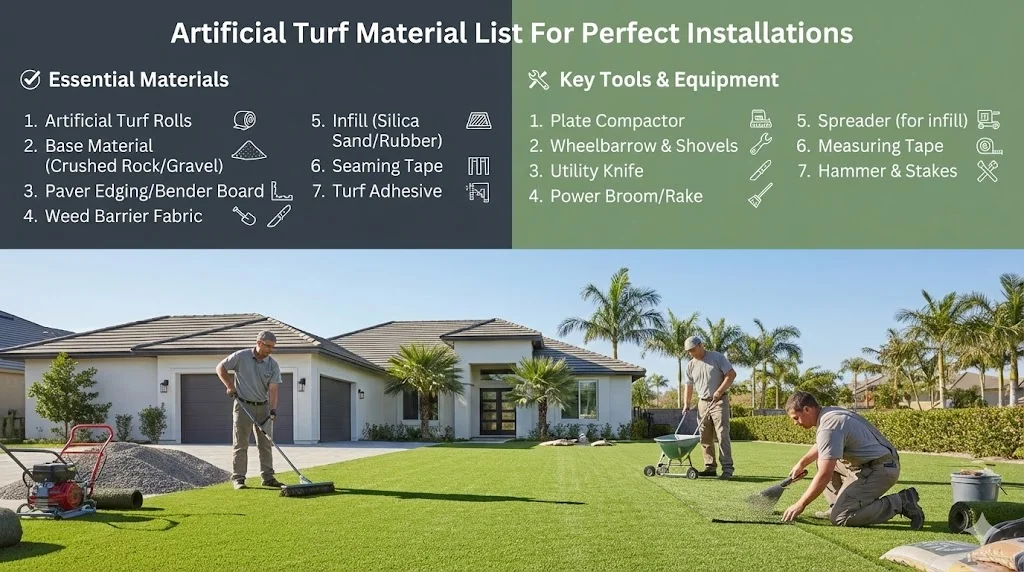
Achieving a truly stunning and long-lasting artificial turf lawn hinges on selecting the right components. From a meticulously engineered sub-base and the perfect infill to secure seaming, durable edging, effective weed and rodent barriers, and the essential tools for installation, every detail matters. This comprehensive guide breaks down each material category, explaining how these elements work together for optimal drainage, compaction, thermal comfort, and wear resistance. Discover how smart material choices can solve common installation headaches like standing water, lifting edges, pet odors, and excessive heat. You’ll gain actionable insights for residential, commercial, pet-friendly, putting green, and sports field applications, ensuring your project performs beautifully year after year. Beyond a detailed material list and installation overview, we provide clear comparison tables, handy tool checklists, and practical best practices to empower both DIY enthusiasts and decision-makers to choose materials perfectly suited for their site conditions.
Synthetic Grass DFW proudly serves Dallas–Fort Worth clients with custom-tailored installations, a strong commitment to USA-made materials, and our own expert in-house installation crews (never subcontractors). We’re ready to provide a free quote to help you plan your material selection and costs. Our deep local DFW knowledge is key to matching sub-base and infill choices specifically to the region’s unique clay soils and drainage patterns. Keep reading to compare sub-bases, infill types, seaming products, edging solutions, barriers, and the crucial tools that guarantee a flawless synthetic grass installation.
What Are the Best Sub-base Materials for Your Artificial Turf Installation?
The sub-base is the critical engineered layer beneath your turf, providing essential stability, ensuring proper drainage, and preventing long-term settlement. Its vital role is to evenly distribute loads, resist movement from foot traffic or equipment, and create a perfectly uniform surface so your turf backing and infill can perform exactly as intended. The right compaction and sub-base material are key to reducing ponding, keeping seams stable, and preventing post-installation settlement, all of which protect your turf’s beautiful appearance and drainage capabilities. Choosing a sub-base depends on your existing soil, slope, intended use, and budget; here in many DFW yards, tackling clay soils and occasional heavy downpours demands materials with reliable compaction and permeability.
Which Sub-base Options Guarantee Superior Drainage and Lasting Stability?
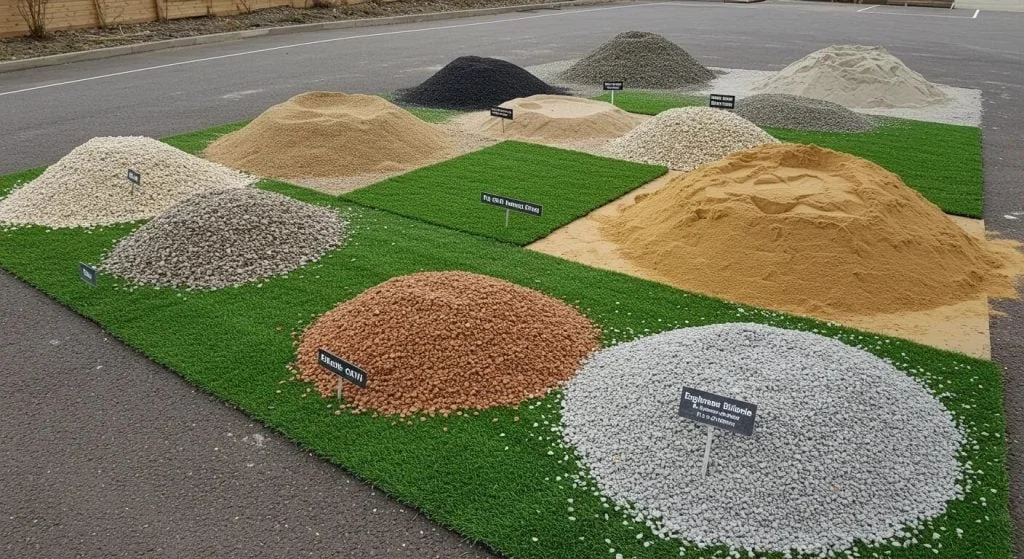
Selecting the ideal sub-base is all about balancing drainage with compaction. You need a material that compacts into a rock-solid platform while still allowing water to effortlessly drain away from your turf. For expansive clay soils, a free-draining base or increasing the base depth is crucial to prevent turf from showing settlement patterns and to effectively manage surface water during our DFW storms. For typical residential lawns, a moderately compacted layer often does the trick; however, for high-traffic areas or commercial fields, a deeper, expertly graded road base delivers unbeatable long-term stability. Always keep an eye out for signs of inadequate drainage—like soft spots, uneven turf, or surface pooling—and address them promptly by improving base gradation or depth.
How Do Crushed Miscellaneous Base, Decomposed Granite, and Class II Road Base Stack Up?
Our three most common sub-base options each offer distinct advantages in drainage, compaction behavior, and cost. The key is to choose the one that perfectly matches your site’s expected load and drainage requirements. Below, you’ll find a clear comparison to help guide your material selection for residential, pet, putting green, and commercial installations.
This table provides a concise comparison of the most popular sub-base materials, evaluating their drainage, compaction characteristics, relative cost, and ideal use cases. It’s designed to help you confidently pick the perfect base for your project.
| Sub-base Type | Drainage | Compaction Requirement | Cost | Best Use Cases |
|---|---|---|---|---|
| Crushed Miscellaneous Base (CMB) | Medium | High — compacts into a firm platform | Medium | Residential lawns, moderate foot traffic areas |
| Decomposed Granite (DG) | Low–Medium | Moderate — binds when compacted but can erode | Low–Medium | Decorative edges, low-traffic yards, gentle slopes |
| Class II Road Base | Medium–High | Very high — engineered for load-bearing and uniform compaction | Medium–High | Commercial areas, sports turf, heavy-traffic zones |
This comparison clearly shows that Class II Road Base is the top choice when long-term stability and heavy load-bearing are critical, while Crushed Miscellaneous Base (CMB) offers a well-balanced solution for most residential installations. Decomposed granite works beautifully for aesthetic applications but might need extra stabilization in wetter or high-traffic spots.
Discover the Top Infill Materials for Synthetic Grass and Their Amazing Benefits!
Infill is what truly brings your turf to life, filling the space between fibers to support blades, provide essential ballast, influence thermal comfort, and deliver crucial shock absorption. The type of infill you choose directly impacts surface temperature, pet odor control, and how your turf handles impacts and traffic. Matching infill properties to your specific use—whether for pets, play, putting greens, or simply a beautiful decorative lawn—is vital for ensuring both peak performance and user comfort. Your infill selection should also consider maintenance routines (like periodic raking and top-ups), compatibility with your turf fiber type (polyethylene or polypropylene), and environmental preferences (such as crumb-rubber alternatives versus engineered mineral or organic infills). Choosing the right infill is key to reducing odors, moderating heat, and keeping those blades standing tall for lasting beauty and consistent playability.
How Do Silica Sand, Zeofill, and Coated Silica Elevate Turf Performance?

Each infill option brings its own unique advantages: silica sand adds crucial weight and support, Zeofill and similar petroleum-free organic or silica-coated infills are fantastic for odor control and cooling, and coated silica significantly boosts comfort by reflecting heat and lowering surface temperatures. Silica sand is a durable and economical choice for general lawns but offers limited odor control and heat mitigation. Zeofill (and other pet-focused infills) combine powerful antimicrobial properties with excellent porosity to help liquids drain and odors dissipate much faster. Coated silica and specialized cooling infills are designed to reduce heat transfer, helping your turf maintain a noticeably lower surface temperature even in direct sun.
This table makes it easy to compare leading infill categories by their cooling effect, pet odor control, shock absorption, and maintenance needs. Use it to clarify which choices are perfect for pets, active play areas, or precision putting greens.
| Infill Type | Cooling Effect | Pet Odor Control | Shock Absorption | Maintenance |
|---|---|---|---|---|
| Silica Sand | Poor–Moderate | Poor | Moderate | Low — occasional top-up |
| Zeofill / Pet-Specific Infill | Moderate | Good | Moderate | Moderate — raking & flushing recommended |
| Coated Silica / Cooling Infill | Good | Moderate | Good | Moderate — periodic redistribution |
This comparison clearly shows that while silica sand is a cost-effective choice for stability, Zeofill and coated infills add valuable pet-friendly and cooling benefits, albeit with slightly higher upkeep requirements. For homes with pets and in the hot climates common across DFW, pet-focused or coated infills often provide the best overall experience and comfort.
Research indicates that surface temperatures on synthetic grass can be significantly higher than natural grass, with variations depending on infill type.
Synthetic Grass Thermal Environment: A Systematic Review of Surface Temperatures
There are concerns regarding high surface temperatures on synthetic grass sports surfaces influencing the surrounding thermal environment, potentially increasing heat stress and impacting athlete safety. As such, studies have investigated changes to the thermal environment surrounding synthetic grass surfaces in comparison to both natural grass, and synthetic surfaces with different features, but this body of research has not been systematically reviewed.
Therefore, this systematic review aimed to (i) determine if there are differences in the thermal environment surrounding synthetic grass surfaces compared with natural grass surfaces, and (ii) determine if there are differences in the thermal environment between different types of synthetic grass surfaces. A systematic review adhering to the PRISMA guidelines was performed. The eligibility criteria required investigations to report at least one of the following environmental parameters on or directly above both a synthetic surface and a comparator group of either natural grass or an alternative synthetic grass surface used in sport: Air temperature, mean radiant temperature, humidity, wind velocity, unified heat stress indices (i.e. wet-bulb-globe temperature and heat index) and/or surface temperature. Twenty-three studies were identified.
The only parameters that were consistently higher on synthetic grass compared to natural grass were the air temperature (range: 0.5–1.2 °C) and surface temperature (range: 9.4–33.7 °C), while the mean radiant temperature, humidity, wind velocity and wet-bulb-globe temperature remained similar or required more data to determine if any differences exist. Synthetic grass surfaces consisting of styrene butadiene rubber infill or a shock pad had increased surface temperatures, whereas surfaces with thermoplastic elastomer infill, Cool climate turf fibres or HydroChill had lower surface temperatures.This systematic review has demonstrated that air and surface temperatures can be incr
Which Infill Types Are Truly Best for Pet-Friendly and Cooling Applications?
When animal odor control and easy washability are your top priorities, always choose an infill specifically designed for pet use. These specialized infills are engineered to minimize bacterial growth and efficiently move liquids through your turf system. For superior cooling, opt for coated silica or other reflective infills that significantly reduce heat retention and dramatically improve surface comfort during those scorching summer months. Maintenance routines will vary: pet-friendly infills thrive with routine rinsing and targeted spot treatments, while cooling infills may need occasional grooming to ensure even material redistribution. Consider a smart hybrid approach—using sand for foundational stability with a top layer of pet-friendly or cooling infill—to perfectly balance weight, support, odor control, and thermal comfort.
How Do Seaming and Adhesive Materials Secure Your Artificial Turf for a Lifetime?
Seaming materials are what transform individual turf rolls into one continuous, beautiful surface. They must deliver long-lasting strength and remain flexible through all temperature cycles. Proper seam preparation—including clean backing contact, precise seam tape placement, and using adhesives perfectly compatible with your turf backing—is crucial. This prevents unsightly seam separation, eliminates tripping hazards, and closes any unwanted gaps. Factors like weather sensitivity, cure time, and expected mechanical stress will determine whether seam tape, polyurethane adhesive, or mechanical fasteners (like sod staples) are the right choice; each method excels in specific situations. Following best practices for alignment, adhesive application, clamping, and curing is absolutely essential to achieve seams that are both discreet and structurally sound for years to come.
What Are the Key Differences Between Seam Tape, Polyurethane Adhesive, and Sod Staples?
Seam tape offers a quick, relatively clean method for joining turf, especially when your base is firm and seams are straight. In contrast, polyurethane adhesive provides a much stronger chemical bond, making it ideal for high-traffic areas and gracefully curved seams. Sod staples serve as a mechanical backup or a temporary hold during curing, but they are not a primary long-term seaming solution for heavy-use installations. The differences are clear: tape is easier for DIYers but less forgiving, polyurethane adhesive typically delivers a superior tensile bond, and polyurethane adhesives require dry, warm conditions for optimal curing. Always match your seam product to your expected traffic patterns, seam geometry, and local weather windows for the best results.
Before diving into the table, let’s clarify its purpose: the comparison below will help you understand exactly when to use tape, adhesive, or mechanical fasteners. It outlines ease of use, strength, cure time, and recommended applications. Use this table to confidently decide which seaming product perfectly fits your project’s scope and schedule.
| Seam Product | Ease of Use | Strength | Cure Time / Weather Sensitivity | Best Application |
|---|---|---|---|---|
| Seam Tape | High | Medium | Immediate hold; limited in wet conditions | Straight seams, DIY, quick installs |
| Polyurethane Adhesive | Medium | High | Requires warm/dry conditions to cure fully | High-traffic or commercial seams |
| Sod Staples / Turf Nails | High | Low–Medium (mechanical only) | N/A — instant mechanical hold | Temporary holding, perimeter fastening |
This table clearly illustrates that adhesive is the strongest long-term choice when conditions permit, while seam tape is perfect for controlled, dry installations. Staples, on the other hand, are best used as mechanical aids or perimeter fasteners during the installation process.
What Are the Best Practices for Achieving Perfect Seam Installation and Turf Joining?
Achieving truly perfect seams starts with meticulously straightening and trimming edges so that backing surfaces meet flawlessly and evenly. This ensures your adhesive or tape bonds uniformly and virtually eliminates any chance of puckering. Always clean the turf backing thoroughly and remove all debris to maximize adhesion. Use seam clamps or weighted rollers to maintain consistent contact while your tape or adhesive cures. Allow full cure times for adhesives and avoid heavy traffic until bonds reach their recommended strength—this critical step prevents seam failure and significantly extends the life of your joint. Finally, make it a habit to check seams seasonally and promptly top-dress or re-secure any areas showing separation to maintain a smooth, safe, and beautiful surface.
Which Edging and Perimeter Materials Are Absolutely Essential for Turf Longevity?
Edge restraint is crucial for securing your turf perimeter, preventing unsightly uplift, and keeping infill perfectly contained. It also provides vital protection for seams and maintains that crisp, clean aesthetic line where your turf meets planting beds, pavers, or concrete. Choosing the right edging depends on your layout (curves versus straight lines), the underlying substrate, and whether your installation requires a robust concrete anchor or a lighter landscape edging. Effective edging must resist rodents and root intrusion where applicable, and pair perfectly with appropriate fasteners and terrace boards to hold turf edges tight against foot traffic and mowing. Properly installed edging dramatically reduces maintenance and prevents premature separation at exposed edges, protecting your investment.
How Do Landscape Edging, Terrace Board, and Turf Nails Secure Your Turf Edges?
Landscape edging offers a low-profile, flexible barrier that’s perfect for retaining infill and beautifully defining edges. Terrace board, in contrast, provides a rigid, timber-like anchor for turf edges in raised planters or elegant border transitions. Turf nails or spikes are essential for securing both edging materials to the substrate and holding your turf firmly down along curves and straight runs; always choose corrosion-resistant fasteners to prevent failure over time. For gracefully curved borders, flexible landscape edging makes shaping a breeze. However, for heavy-use perimeters or where a perfectly clean mow line is required, terrace board with proper anchoring delivers the best long-term resistance to uplift. Remember to use the correct fastener spacing and depth to avoid any loose or lifted edges.
What Weed and Rodent Barriers Should You Use Under Your Artificial Grass?
Smart underlayment selection is key to preventing weeds, blocking burrowing rodents where necessary, and ensuring water drains efficiently while protecting your sub-base. Woven geotextile fabric performs exceptionally well as a primary weed barrier, combining impressive durability with excellent permeability. For extra resistance to root penetration, consider heavy-duty weed barrier fabrics or specialized landscaping cloth. In areas with a high risk of rodents, placing a galvanized wire mesh beneath the turf is a smart move to deter burrowing while still preserving drainage; just ensure the mesh pore sizes allow water flow but effectively resist small mammals. Proper overlap, secure fastening, and seamlessly integrating barriers with your edging will prevent gaps that could allow weed growth or rodent entry, significantly extending the life and pristine cleanliness of your synthetic lawn.
Before we dive into the list, this paragraph explains common edging options and their selection criteria, empowering both installers and DIYers to perfectly match edging to their site’s unique needs.
- Landscape Edging: Super flexible, making it easy to shape around curves and flower beds.
- Terrace Board: Rigid and robust, ideal for crisp straight edges, raised beds, and clean mower lines.
- Turf Nails / Spikes: Essential for securing both edging and turf; always choose corrosion-resistant materials for lasting hold.
These smart edging choices, when combined with correctly installed underlayment and fasteners, create a rock-solid perimeter that keeps your turf and infill perfectly in place, while also preventing any intrusion by weeds or pesky rodents.
What Tools Are Absolutely Necessary for a Flawless Artificial Turf Installation?
The right tools truly make all the difference between a patchy, uneven turf job and a smooth, incredibly durable installation. Essential equipment is needed to expertly prepare and compact the base, precisely cut and seam the turf, apply infill evenly, and finish the fibers for that natural look and consistent performance. Investing in—or wisely renting—quality tools like project-sized plate compactors, professional-grade utility knives, power brooms, and seam rollers will save you time, reduce rework, and ensure a superior finish. A clear checklist helps both DIYers and seasoned professionals verify readiness and guarantees that each installation phase utilizes the perfect tools for your intended surface and traffic.
Which Cutting, Compacting, and Spreading Tools Are Absolutely Essential?
Below is your practical checklist of primary tools for expert base preparation, accurately cutting turf, and spreading infill with precision. Each tool plays a vital role in a specific installation step, leading to reliable, long-lasting results you’ll love.
- Plate Compactor: Crucial for compacting your sub-base to the exact density needed, preventing future settlement.
- Utility Knife with Hook Blades: Delivers the precise cuts required for perfect seams and clean edge trimming.
- Landscape Rakes / Metal Rakes: Essential for leveling and distributing base materials flawlessly before compaction.
- Drop Spreader / Broadcast Spreader: Ensures infill is applied and distributed uniformly across your turf for an even finish.
After reviewing the checklist, remember that tool quality directly impacts your final finish. Using the correct compactor plate size for the job and always having sharp blades for your cuts will significantly reduce installation time and dramatically improve seam precision. Renting heavy equipment for one-off projects is a smart, cost-effective option, while professionals often invest in long-life tools for their repeated, demanding use.
How Do Power Brooms and Utility Knives Elevate Your Installation Quality?
Power brooms and utility knives are your go-to finishing tools that directly impact both the appearance and seam quality of your turf. The power broom effortlessly lifts fibers and evenly distributes infill, while the utility knife creates those tight, accurate edges and perfect seam profiles. Always use the power broom after infill application to stand fibers upright, instantly improving your turf’s aesthetics and ensuring even wear patterns. When cutting turf, change blades frequently and score the backing with care to avoid frayed fibers and uneven edges that can compromise your seams. Following a precise sequence—final trimming, seam finishing, then brooming—guarantees clean joins, perfectly even infill, and a natural-looking finish that will reduce maintenance needs over time.
Why Choose Professional Installation with USA-Made Materials for Your Artificial Turf?
Professional installation is your guarantee that material choices, base engineering, seaming technique, and edging details all work together seamlessly to deliver predictable, long-term performance. Our experienced crews perform accurate grading, correct compaction, proper seam bonding, and professional edge restraint—these are the critical steps that minimize future repairs and safeguard your warranties, especially when tied to premium USA-made products. Opting for USA-made materials ensures consistent manufacturing standards, traceable quality, and supply reliability, benefiting both residential and commercial projects. For DFW clients seeking a truly turnkey solution, partnering with a local installer who deeply understands regional soils and drainage patterns significantly reduces risk and streamlines project timelines, all while ensuring your materials meet rigorous quality expectations.
How Does Expert Installation Guarantee Unbeatable Durability and Stunning Aesthetic Appeal?
Our expert installers follow a meticulous sequence of soil evaluation, engineered sub-base construction, precise seaming, and correct infill calibration. This prevents common failures like seam delamination, edge uplift, and uneven surface drainage. Professionals are adept at mitigating DFW-specific issues such as clay shrink-swell and heavy summer storms by carefully adjusting base depth, planning drainage strategically, and selecting materials perfectly suited to local conditions. By using our own in-house crews rather than subcontractors, we maintain consistent workmanship and accountability across every single stage of your project. These practices not only extend your turf’s lifespan and preserve its beauty but also significantly reduce life-cycle maintenance compared to installations that cut corners during preparation or seaming.
What Are the Incredible Benefits of Using Locally Sourced, High-Quality Synthetic Grass Products?
Choosing locally sourced, USA-made synthetic grass and components delivers a host of benefits, including consistent material specifications, quicker access to replacement parts or support, and clearer warranty recourse from manufacturers operating under stringent domestic quality controls. Local supply chains mean reduced lead times and help our installers perfectly match products to the unique Dallas–Fort Worth climate and specific use cases like petscapes, putting greens, and commercial landscapes. Working with a provider that emphasizes USA-made materials and customized solutions means your project can be precisely tailored to your performance needs while confidently meeting all regulatory and safety expectations. To plan a truly reliable installation and determine the optimal material list for your property, we invite you to request a free quote from Synthetic Grass DFW today to get personalized project recommendations and transparent pricing.
Your next step is simple: request a free quote! This allows you to review all your material options and schedule a comprehensive assessment by a trusted local installer who proudly uses USA-made materials and our dedicated in-house crews. Synthetic Grass DFW is ready to provide a thorough site evaluation, expert material guidance, and a tailored installation plan that perfectly aligns with your performance desires and budget goals.
Frequently Asked Questions About Artificial Turf
What kind of maintenance does artificial turf need after it’s installed?
Keeping your artificial turf looking its best involves a few simple, regular tasks. You’ll want to brush the fibers occasionally to help them stand upright, clear away any debris, and check for any minor signs of wear. Depending on the infill you’ve chosen, you might need to top it up periodically to ensure peak performance. For pet-friendly installations, a quick rinse now and then can work wonders for odor control. Plus, routine checks for seam integrity and edge stability are key to maximizing your synthetic grass’s lifespan.
Can I install artificial turf right over my existing grass?
While it’s technically possible to lay artificial turf over existing grass, we strongly advise against it. The underlying natural grass can create an uneven surface and often leads to frustrating drainage problems down the line. For truly superior results, it’s always best to remove the old grass and meticulously prepare a proper sub-base. This crucial step guarantees a stable foundation, dramatically improves drainage, and significantly enhances the overall performance and longevity of your artificial turf. Proper installation techniques are your best defense against future complications and maintenance headaches.
How does DFW weather impact artificial turf performance?
Our Dallas-Fort Worth weather can definitely influence how your artificial turf performs. High summer temperatures can cause the surface to heat up, making it less comfortable for pets and people. Conversely, heavy rains can lead to drainage issues if your sub-base isn’t expertly engineered. And while rare, extreme cold can make the turf less flexible. The good news is that by choosing the right materials and installation techniques specifically tailored to our local climate, you can effectively mitigate these effects, ensuring your turf remains functional and comfortable throughout the entire year.
What are the environmental considerations for artificial turf?
Artificial turf presents both positive and negative environmental impacts. On the positive side, it drastically cuts down on water usage compared to natural grass, eliminating the need for constant irrigation. However, there are valid concerns regarding the disposal of synthetic materials at the end of their life cycle and their potential for heat retention. Many modern products are now crafted from recycled materials and specifically designed to be more eco-friendly. It’s important to weigh these factors and select products that align with your sustainability goals when making your artificial turf choice.
How long can I expect my artificial turf to last?
The lifespan of artificial turf can vary quite a bit, depending on factors like how much it’s used, how well it’s maintained, and the quality of the materials. Generally, you can expect high-quality synthetic grass to last anywhere from 10 to 20 years. Regular maintenance, including brushing, cleaning, and replenishing infill, can certainly extend its life even further. Additionally, selecting the correct type of turf for your specific application—whether it’s for your home, a commercial space, or a sports field—will also play a big role in its longevity. Investing in premium materials and professional installation is truly the key to maximizing your turf’s lifespan.
Is artificial turf a safe choice for my pets and children?
Absolutely, artificial turf is generally very safe for both pets and children, especially when you choose products made from non-toxic materials. Many modern synthetic grasses are thoughtfully designed with safety in mind, often featuring antimicrobial properties to help reduce odors and bacteria. However, it’s crucial to select infill materials that are specifically pet-friendly and to ensure proper drainage to prevent any issues. Regular maintenance, such as cleaning and rinsing, will also help you maintain a safe and hygienic environment for everyone, including your furry friends.
What should I look for when choosing a professional artificial turf installer?
When you’re selecting a professional installer for your artificial turf, always consider their experience, reputation, and the quality of materials they use. Seek out companies that truly specialize in synthetic grass installations and boast glowing customer reviews. It’s also smart to ask about their detailed installation process, any warranty offerings, and whether they prioritize USA-made materials. A reputable installer will provide a transparent, detailed quote and be happy to answer all your questions about the installation process and ongoing maintenance requirements.
Conclusion: Your Path to a Perfect Artificial Lawn
Choosing the right materials and tools for your artificial turf installation is the secret to creating a durable, stunning lawn that perfectly meets your unique needs. By truly understanding the benefits of various sub-base and infill options, you can dramatically enhance your turf’s performance and longevity while keeping maintenance to a minimum. For a truly seamless installation experience, consider partnering with local experts who prioritize top-tier quality and custom-tailored solutions. Don’t wait—request a free quote today to explore the very best options for your synthetic grass project!
Get every detail right with high-quality artificial turf materials and expert guidance from Synthetic Grass DFW. Our team ensures your lawn is installed flawlessly, durable, and maintenance-free. Contact us


