
Common Mistakes to Avoid During Artificial Grass Installation
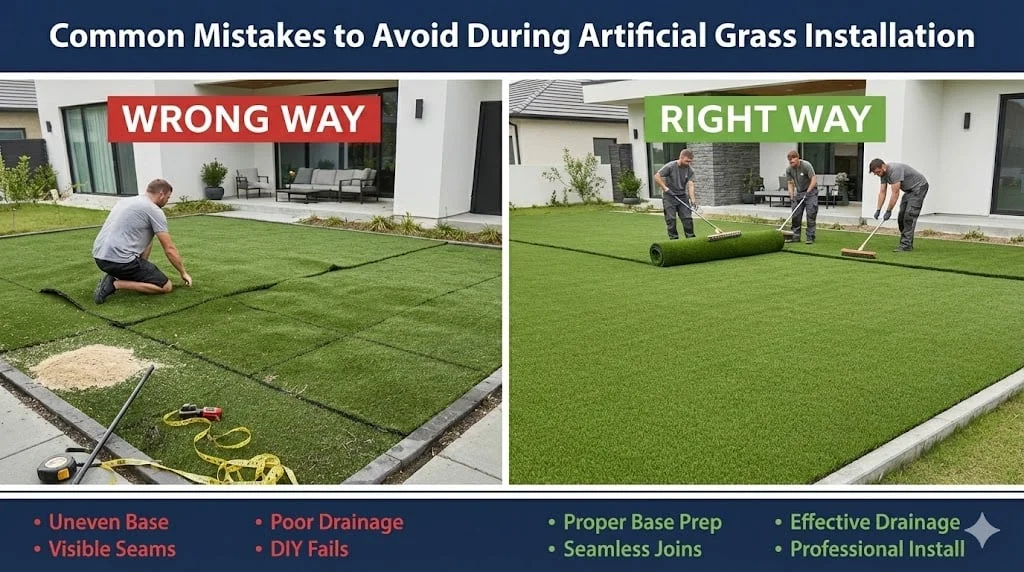
Getting artificial grass right in Dallas Fort Worth means understanding our unique local conditions – think DFW soil, intense heat, and tricky drainage. Skip the common pitfalls like pooling, rippling, or early wear, and ensure your investment lasts! This guide dives deep into the most frequent installation blunders specific to our DFW climate, explaining *why* they happen and offering practical steps you can take (or look for when hiring a pro). We’ll share expert insights on base prep, grading, pet-friendly drainage, seamless turf layouts, weed barriers, and choosing the perfect turf for your home, business, or furry friends. Expect clear lists, helpful comparison tables, and actionable checklists to help you compare materials and approaches tailored for DFW.
What Are the Most Frequent Artificial Grass Installation Mistakes We See in Dallas Fort Worth?
Here in Dallas Fort Worth, common artificial grass installation mistakes often come down to poor base preparation, inadequate drainage, noticeable seams, neglected weed barriers, and simply picking the wrong turf for the job. Each of these errors gets amplified by DFW’s unique challenges—like our heavy clay pockets, sudden downpours, and scorching summer heat—leading to bigger aesthetic and performance headaches. Below, you’ll find a prioritized list of the top mistakes and their immediate consequences, helping you spot potential red flags before, during, or after your installation.
- Improper Base Preparation: Skipping proper compaction or using unstable base materials often leads to unsightly ripples, sinking spots, and base washout.
- Poor Drainage & Grading: Not enough slope or using impermeable layers can cause water pooling, mold growth, and unpleasant odors, especially in pet areas.
- Visible Seams & Incorrect Pile Direction: Sloppy joining or mismatched blade orientation creates obvious lines and patchy color variations under the sun.
- Neglecting Weed Barriers & Edge Restraints: Allowing weeds to creep through or the turf to shift at the edges can result in bumps, lifted edges, and even tripping hazards.
- Wrong Turf Type for the Job: Installing high-pile turf in high-traffic or pet zones often leads to premature matting and increased maintenance.
These common missteps lead us directly to preventing the biggest single failure: base preparation. Let’s dive into this critical area with step-by-step guidance next.
Why Is Improper Base Preparation the #1 Artificial Grass Installation Mistake?
Improper base preparation is truly the leading cause of turf failure because your sub-base is the backbone of your synthetic turf system, providing crucial structural stability, drainage pathways, and load-bearing capacity. In DFW soils, clay pockets and inconsistent compaction can cause uneven settling unless the sub-base is properly excavated, replaced, graded, and compacted. Without this essential step, seams can open, the turf will ripple, and drainage systems will fail. Proper compaction and selecting the right base material ensure loads are distributed evenly and the surface remains consistent, preventing costly early repairs. Understanding this mechanism clearly shows why installers must perform these practical steps, and what homeowners or property managers should always verify.
How Do Drainage Issues Impact Your Artificial Turf’s Longevity in DFW?
Drainage failures dramatically shorten your turf’s lifespan by trapping moisture against the turf backing and destabilizing the base. This creates a perfect breeding ground for microbial growth, leads to unpleasant odors in pet areas, and can cause base wash-out during the heavy rainfall events common in DFW storms. Standing water also increases abrasion from foot traffic, causes infill to migrate, and can even void warranties if caused by improper installation. Addressing drainage proactively—through smart grading, permeable sub-base materials, and appropriate infill—significantly reduces long-term maintenance costs and extends your turf’s usable life. Understanding these downstream effects makes it clear why drainage design is a core installation priority and directly connects to the specific solutions we’ll cover later.
How Can You Ensure Proper Base Preparation for Your Artificial Grass?
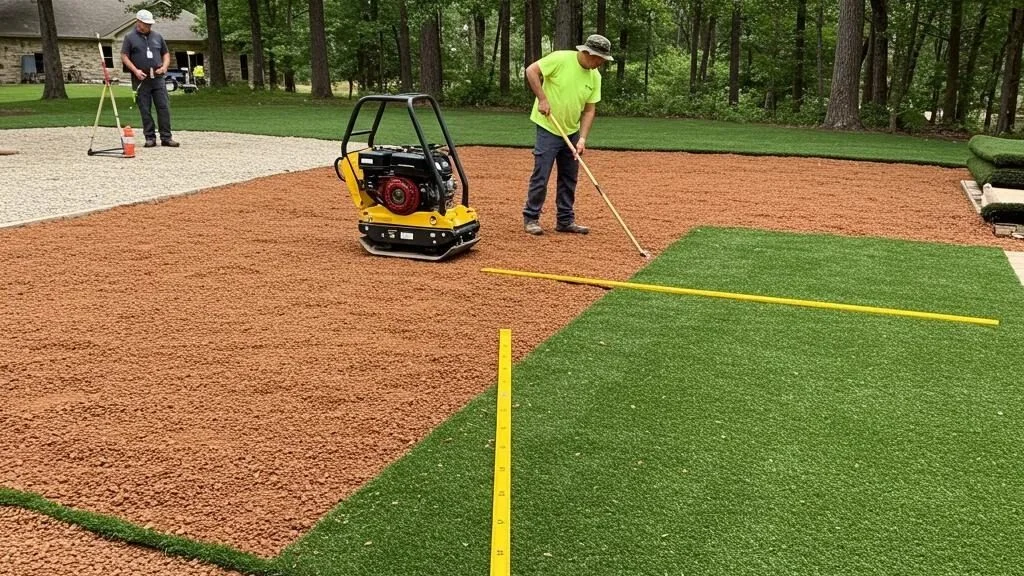
Getting your base preparation right prevents the vast majority of visual and performance issues with synthetic turf. It’s all about creating a stable, well-draining foundation perfectly suited to our local DFW soil conditions. The key steps involve clearing and removing the existing subgrade, establishing a consistent slope, installing a compactible permeable base, and compacting it to the ideal density with a plate compactor. These actions build a robust platform that resists settlement, supports seams, and keeps drainage pathways clear beneath your turf. Below, you’ll find practical procedural steps and a quick checklist for your site inspection or DIY prep.
- Clear & Remove Organic Topsoil: Excavate to expose a stable subgrade, making sure to remove all roots, debris, and soft organic layers.
- Grade to Designed Slopes: Establish a minimum slope (typically around 1-2%) away from any structures to prevent water pooling.
- Install Recommended Base Material in Lifts: Place decomposed granite or crushed rock in layers, compacting each lift to the required density.
- Verify Compaction & Flatness: Use a plate compactor and a straightedge to check for any bounce or soft spots before laying your turf.
Knowing which base materials work best for DFW soils is key to selecting the right build-up for lasting durability and drainage. While this technical checklist is a great start, professional installers ensure each stage meets precise performance targets. Synthetic Grass DFW offers expert installation guidance and free estimates to help homeowners decide between a DIY approach and professional installation.
Let’s compare base materials: The table below breaks down common sub-base options by their drainage, compaction behavior, cost, and how well they suit typical DFW soil scenarios, helping you choose the perfect fit for your property.
| Base Material | Drainage | Compaction / Stability | Cost | Suitability for DFW Soil |
|---|---|---|---|---|
| Decomposed granite (DG) | Excellent permeability | Compacts beautifully when installed in lifts | Moderate | Ideal for residential yards with our common clay/silt overlays |
| Crushed limestone / crusher-run | Good to excellent | Extremely stable once compacted | Moderate | Great for high-traffic areas or slopes needing extra structural strength |
| Road base / recycled aggregate | Moderate | Requires mechanical compaction; very durable | Lower to moderate | Suitable for heavy-use commercial projects with proper grading |
| Sand-only base | Poor in isolation | Lacks cohesion; tends to shift under load | Low | Absolutely not recommended alone in DFW due to our clay subgrades |
This comparison clearly shows why decomposed granite and crushed rock are often the top choices for DFW installations: they strike the perfect balance between drainage and compaction for our local soils and climate. Choosing the wrong base significantly increases the risk of rippling, drainage failure, and costly repairs down the line.
What Are the Risks of Skipping Site Clearing and Leveling?
Skipping site clearing and leveling introduces immediate and long-term headaches. Organic debris, leftover roots, and even small grade variations create pressure points that lead to visible ripples and weak spots once your turf is installed and under load. Roots left behind will decompose, creating voids and uneven settlement. Minor grade errors can concentrate runoff, causing standing water, and debris can even puncture the turf backing during infill compaction. Our inspection process catches these risks with a thorough root/debris sweep, probe testing for soft pockets, and running a straightedge over the prepared base to confirm perfect flatness and slope. Addressing these crucial items *before* turf is laid prevents expensive rework and ensures your seams and edge restraints perform exactly as intended.
Which Base Materials Are Truly Best for DFW Soil and Climate?
When selecting a base material for DFW, it’s all about finding the right balance of permeability, compaction ability, and cost to match our clay-heavy subsoils and temperature-driven expansion. Decomposed granite (DG) offers a naturally permeable, compactible layer that locks together beautifully when properly graded and watered during compaction, making it a popular choice for residential projects. Crushed rock or limestone provides superior structural strength for commercial or high-traffic zones, while road base can be a durable, lower-cost option when compacted correctly. Our rule of thumb: use DG for typical yards, crushed rock for slopes or heavy-use areas, and *always* avoid sand-only bases without a stabilizing aggregate to prevent base migration.
What Drainage Problems Commonly Occur with Artificial Grass in Dallas Fort Worth?

Drainage problems in DFW artificial grass installations typically stem from poor grading, impermeable backing layers, or using inappropriate infill that blocks water percolation. These issues lead to unsightly pooling, accelerated infill migration, and base erosion during our intense DFW storms. A proper design combines the right slope, permeable sub-base materials, and infill choices that maintain porosity while providing stability. Below is a concise list of common drainage failure modes and practical fixes to remedy each condition right at installation time.
- Insufficient Slope: Regrade your area to achieve at least a 1% slope away from structures and towards approved drainage paths.
- Impermeable or Compacted Base: Replace or rework the base with permeable aggregate, ensuring proper lift compaction instead of over-compacting fines.
- Wrong Infill or Excessive Compaction: Use infill that maintains permeability (like silica sand or specialized pet infills) and avoid over-brushing, which can seal voids.
Beyond these technical remedies, many property owners wisely choose installers experienced with pet-friendly drainage and specialized sub-base solutions. Synthetic Grass DFW can advise on the best pet-friendly drainage alternatives and provides free estimates to determine the ideal approach for your unique landscape.
Let’s explore drainage solutions: The following table compares various drainage strategies, highlighting their installation steps, pros/cons, and the best use-cases for DFW yards and pet areas.
| Drainage Strategy | Installation Step | Pros | Cons | Best Use-Case |
|---|---|---|---|---|
| Permeable sub-base (DG/rock lifts) | Install in lifts with compaction and cross-slope | Excellent percolation; very stable | Slightly higher material cost | Residential yards with irrigation and storm runoff |
| French drain / perimeter drain | Trench and install pipe with aggregate, outlet to storm system | Highly effective for concentrated runoff | Requires excavation and an outlet | Areas with poor natural discharge or significant slopes |
| Permeable backing + open-weave turf | Use turf with permeable backing and compatible infill | Adds a crucial secondary drainage path | May involve costlier turf options | Pet areas and high-irrigation lawns |
| Specialized pet infill | Place polymer or zeolite-based infill designed for odor control | Significantly improves drainage and odor management | Higher material cost | Pet runs and kennels |
How Does Poor Grading Lead to Water Pooling on Your Synthetic Turf?
Poor grading creates low spots where water collects and simply can’t drain away. This leads to prolonged saturation, premature turf backing deterioration, and accelerated infill movement under foot traffic. We recommend a minimum slope of about 1% (roughly 1/8 inch per foot) away from any structures to ensure proper runoff instead of pooling. Steeper grades can improve shedding but might require terraces or retaining solutions. Identifying poor grading involves a visual inspection after a good rain and probing the sub-base for soft pockets. Remediation might include regrading, adding more base material, or installing targeted drains. Correct grading during installation prevents chronic pooling and truly protects your turf investment over time.
Why Is Using the Right Infill So Important for Turf Drainage?
Infill plays a huge role in permeability, weight distribution, and surface stability. Coarse silica sand or engineered pet infills allow water to move through quickly while helping blades stand upright. In contrast, fine or overly compacted infill can seal pores and severely impede drainage. For pet-friendly areas, granular infills with odor-control additives and maintained porosity are essential for reducing retained moisture and microbial growth. Choosing the wrong infill dramatically increases the risk of surface pooling and accelerates wear by allowing blades to lie flat and debris to accumulate. Proper infill selection and periodic grooming are key to preserving drainage performance and your turf’s beautiful appearance for years to come.
How Do Visible Seams and Uneven Turf Ruin Your Artificial Grass Appearance?
Visible seams and uneven turf have an enormous visual impact because synthetic turf is judged by its continuous color, consistent blade direction, and a perfectly flat, uniform surface. Any seam line, mismatch, or ripple is immediately noticeable and detracts from the natural look. Seam visibility often comes from incorrect joining techniques, backing mismatches, or inadequate tensioning. Uneven surfaces, on the other hand, create shadows and contour lines that clearly reveal installation flaws. The following list outlines common causes and how our installers meticulously plan seam layout and tensioning to achieve a natural, uniform lawn.
- Incorrect Seam Preparation: Failing to precisely trim matching backing or align pile direction creates unsightly gaps and mismatches.
- Insufficient Seam Adhesive or Tape: Using low-quality seam tape or not enough adhesive leads to premature seam separation.
- Tensioning Errors: Not stretching the turf uniformly across the seam can result in buckling or rippling over time.
Preventing visible seams relies on precise preparation, high-quality seam tape and adhesive, and the right tensioning tools. This technical precision is directly linked to the material choices and installation experience we discuss in our turf selection guidelines.
What Causes Visible Seams and How Can We Make Them Disappear?
Visible seams are typically caused by mismatched pile direction, inadequate seam overlap, an excessive seam gap, or even dirt trapped in the seam area. These issues create lines that stand out under sunlight and foot traffic. Our best practices for hiding seams include ensuring the pile direction matches perfectly across all rolls, trimming the backing cleanly, using professional-grade seam tape with contact adhesive, and thoroughly brushing infill over seams to blend blade coverage seamlessly.
Temperature during installation is also crucial; adhesive set and seam tension must account for DFW’s heat expansion to prevent later separation. Correct seam technique preserves visual continuity and significantly reduces the need for future seam repairs.
Why Is Pile Direction So Important for a Truly Natural-Looking Lawn?
Pile direction profoundly affects how your turf looks—from color perception and texture to how light reflects off the blades. Consistent pile orientation across your entire lawn prevents that “patchwork” appearance where sections face different directions and show distinct shine or shade. We meticulously plan roll layouts to ensure the pile leans toward the main viewing angle—often towards your house or the street—creating a uniform, inviting aesthetic. During installation, all seams are aligned so blades lean the same way, and finishing brushes are used to set the pile consistently before and after infill is placed. Proper pile planning delivers a natural, cohesive look that holds up beautifully under varying daylight angles and foot traffic.
Why Is Neglecting Weed Barriers and Edge Restraints a Common Installation Error?
Omitting weed barriers or using weak edge restraints leaves your turf system vulnerable to root intrusion and perimeter movement. This undermines the sub-base, leading to unsightly bumps, lifted edges, and potential tripping hazards. A quality geotextile weed barrier prevents plants from penetrating the turf backing and keeps organic material from mixing into your base. Meanwhile, robust edge restraint systems securely lock the turf down and distribute loads effectively at transitions. Below is a brief problem-solution list explaining common failures and our preferred perimeter options for DFW installations.
- No Weed Barrier: Weeds will inevitably grow through the backing, disturb infill, and create bulges. Always install a quality geotextile underlayment before laying turf.
- Weak Edge Restraint: Turf will lift at transitions without proper nails, staples, or concrete curbing. Use mechanical edging appropriate for your specific application.
- Improper Fastening Spacing: Incorrect nail/staple spacing along edges allows uplift from pets, kids, and lawn equipment. Ensure correct, consistent spacing.
Choosing the right edge and weed control solutions not only reduces maintenance but also protects your warranty considerations. The following table compares edge restraint options for typical DFW scenarios.
| Edge Restraint Type | Installation Method | Pros | Cons | Recommended Use |
|---|---|---|---|---|
| Landscape nails/staples | Fasten through turf into compacted base | Cost-effective; quick to install | May work loose in softer bases over time | Residential edges on stable, well-compacted bases |
| Concrete curbing | Pour concrete curb with turf anchored directly to it | Extremely stable; exceptionally durable | Higher cost; more labor-intensive | High-traffic areas or significant slope transitions |
| Metal/rigid plastic edging | Install rigid edging anchored securely into the base | Good balance of cost and stability | Can sometimes be visually noticeable | Garden borders and walkways |
How Does Forgetting a Weed Barrier Lead to Turf Damage?
When weed barriers are skipped, aggressive grasses and weeds will send roots right through your turf backing and into the base. This displaces infill and creates voids that show up as bumps and uneven surfaces. The organic matter also decomposes within the base, causing soft pockets and uneven compaction over time, which ultimately undermines seam integrity. A proper geotextile underlayment prevents root penetration while still allowing excellent drainage. Regular inspection after installation helps catch any early invasions. Installing and verifying an effective weed barrier from the start prevents these long-term failures and preserves your turf’s pristine appearance.
What Are the Best Methods to Secure Artificial Grass Edges in DFW?
Securing your artificial grass edges effectively means matching the restraint method to its specific use-case. Landscape nails or staples are perfect for typical residential yards with a well-compacted base. Concrete curbing is the ideal choice for high-traffic transition areas or slopes where maximum stability is needed. Rigid edging systems work wonderfully for decorative borders and walkways. Fastening spacing, depth, and secure embedment into compacted base materials are crucial for long-term performance; nails should penetrate the base by several inches and be spaced correctly to prevent any pull-up. Choosing the right edge restraint and verifying its proper installation prevents tripping hazards and keeps your turf looking great, even with DFW’s temperature swings and heavy use.
How Do You Choose the Right Artificial Grass Type to Avoid Installation Problems?
Choosing the appropriate turf type is essential to avoid mismatches that lead to excessive maintenance, matting, or poor drainage performance. Your decisions should hinge on factors like pile height, backing type, material (polyethylene vs. polypropylene), and pet-friendly features such as antimicrobial yarns. Residential lawns typically benefit from mid-pile turf, offering a great balance of aesthetics and durability. Commercial areas demand lower-pile, dense options built for heavy foot traffic. And pet zones absolutely require permeable backing and infill systems specifically designed for rapid drainage and superior odor control. The table below compares various turf types, helping you match product attributes to real-world DFW use-cases.
| Turf Type | Best Use | Pile Height | Infill Needs | Pet-Friendliness |
|---|---|---|---|---|
| Residential Aesthetic Turf | Front/Back yards | 1.5–2.5 in | Moderate sand infill | Moderate |
| Commercial / High-Traffic Turf | Playgrounds, plazas | 0.75–1.5 in | Minimal or compact infill | Low to moderate |
| Pet-Specific Turf | Runs, kennels | 1.0–2.0 in | Permeable engineered infill | High (designed for drainage and odor control) |
| Putting Green Turf | Golf areas | 0.5–0.75 in | Specialized no-sand infill | Not applicable |
What Turf Types Are Best for Residential, Commercial, and Pet Areas in DFW?
Residential installations truly shine with mid-pile, UV-resistant polyethylene turf, offering a natural look that resists flattening and heat discoloration. Commercial areas, on the other hand, demand low-pile, tightly tufted turf with a robust backing to withstand constant foot traffic and equipment loads.
For pet areas, it’s crucial to use turf with permeable backing and engineered infill that maintains excellent permeability and actively controls odors. Antimicrobial yarns add an extra layer of protection against bacterial growth.
Matching the turf precisely to its intended use prevents costly post-installation retrofits and ensures your maintenance expectations align perfectly with actual performance.
How Does Choosing the Wrong Turf Affect Installation and Performance?
Choosing turf with an inappropriate pile height, infill needs, or backing can lead to a host of problems: poor drainage, accelerated matting, and the eventual need for early replacement or costly retrofits like additional drainage or different infill. For instance, a beautiful high-pile aesthetic turf placed in a busy commercial walkway will mat quickly and demand constant grooming. Conversely, a low-pile commercial turf used in a pet run might trap more debris and won’t provide sufficient comfort. Correct selection saves you significant lifecycle costs and reduces the frequency of repairs. When in doubt, always review material attributes and consider a professional evaluation.
Synthetic Grass DFW is your trusted local information hub in Dallas, Texas, 75220. We’re here to provide expert guidance on matching the perfect turf types to your specific project. We also offer free estimates to help homeowners decide whether to tackle a DIY approach or opt for professional installation. For a free quote tailored to DFW soil and your unique use-case, simply request a free estimate today to discover the best turf, base, and drainage combination for your property.
This study highlights the challenges of drainage in clay soils, which are prevalent in the DFW area, and explores alternative solutions to traditional sand-based systems.
Mole Drainage for Clay Soils: Preventing Issues in Turf Installation
The problems of sand slit systems on shrink–swell clay soils are highlighted in this study. Mole drainage as an alternative to sand slitting in natural turf sports surfaces on clays. The study investigates the effectiveness of mole drainage systems (sand slit drainage and mole drainage) for the bypass drainage of heavy clay soils.
Mole drainage as an alternative to sand slitting in natural turf sports surfaces on clays, 2007
Your Frequently Asked Questions About Artificial Grass
What kind of maintenance does artificial grass need after installation?
Maintaining your artificial grass is wonderfully simple compared to a natural lawn! Regular tasks include gently brushing the turf to keep the blades standing tall, clearing away debris like leaves and twigs, and rinsing the surface to wash away dust and pet waste. You might also need periodic infill replenishment to maintain stability and drainage. For pet areas, using specialized infill can be a game-changer for odor control. Plus, it’s always smart to inspect seams and edges regularly to ensure they stay secure and intact, preventing any potential issues down the road.
Can artificial grass be installed right over my existing lawn?
While it’s technically possible to lay artificial grass over an existing lawn, we strongly advise against it. The underlying natural grass will decompose, leading to uneven surfaces and potential drainage nightmares. For the very best and longest-lasting results, it’s crucial to remove the existing grass and prepare the sub-base meticulously. This ensures a stable, solid foundation, prevents future problems, and guarantees superior drainage. Proper site preparation is truly the secret to the longevity and peak performance of your artificial turf.
How does DFW weather impact artificial grass installation?
DFW weather plays a significant role in artificial grass installation! Extreme temperatures can affect the materials we use; high heat causes expansion, while low temperatures lead to contraction. Ideally, installations should happen during moderate weather conditions to ensure the turf adheres perfectly and maintains its shape. Rain can also complicate the process, as wet conditions can create muddy sites and hinder proper compaction of the base material. Planning installations during dry, mild weather helps us avoid these challenges and ensures a flawless finish.
What are the environmental perks of choosing artificial grass?
Artificial grass offers some fantastic environmental benefits, especially here in Texas! You’ll significantly reduce water consumption since it doesn’t need irrigation like natural grass – a huge plus in drought-prone areas. It also eliminates the need for chemical fertilizers and pesticides, cutting down on harmful runoff into our local waterways. Artificial turf provides a durable surface that can handle heavy foot traffic, reducing the need for frequent replacements. Overall, choosing artificial grass is a smart step towards more sustainable landscaping practices.
Is artificial grass safe for my pets and children?
Absolutely, artificial grass is generally very safe for both pets and children! Most modern artificial turf products are crafted from non-toxic materials and are designed to be incredibly durable and wear-resistant. For pet areas, it’s essential to select turf with excellent drainage and antimicrobial properties to effectively manage odors and hygiene. Regular cleaning and maintenance will also ensure a consistently safe and clean play environment. Always look for certifications and safety standards when choosing turf to ensure it meets all health and safety requirements.
How long can I expect my artificial grass to last?
You can expect your artificial grass to have an impressive lifespan, typically ranging from 15 to 25 years, depending on the quality of the materials used and how well it’s maintained. Factors like foot traffic, UV exposure, and local weather conditions can influence its longevity. High-quality turf, combined with professional installation and regular maintenance, can significantly extend its life. It’s always important to follow manufacturer guidelines for care and maintenance to truly maximize the lifespan of your artificial grass investment.
Can artificial grass be recycled?
Yes, many types of artificial grass can indeed be recycled, though the process might vary depending on the specific materials used. Some manufacturers offer convenient take-back programs for old turf, while others can provide information on local recycling facilities that accept synthetic grass. Recycling helps reduce landfill waste and promotes greater sustainability in landscaping. When you’re considering artificial grass, it’s a great idea to inquire about the manufacturer’s recycling policies to ensure you’re choosing an environmentally friendly option.
Ready for a Flawless Lawn?
Successfully installing artificial grass in Dallas Fort Worth truly hinges on avoiding common pitfalls related to base preparation, drainage, and turf selection. By understanding these critical factors, you, as a homeowner, can ensure a long-lasting, visually stunning lawn that effortlessly withstands our local climate challenges. For personalized advice and professional installation services, we invite you to reach out to Synthetic Grass DFW for a free estimate. Take the first step towards a beautiful, truly maintenance-free yard today!
Our experts handle every detail, from preparation to finishing touches, so your yard looks flawless year-round. Contact us today and enjoy a beautiful, worry-free lawn without the hassle.


