
Artificial Grass Installation Timeline in Dallas–Fort Worth: What Homeowners Should Expect
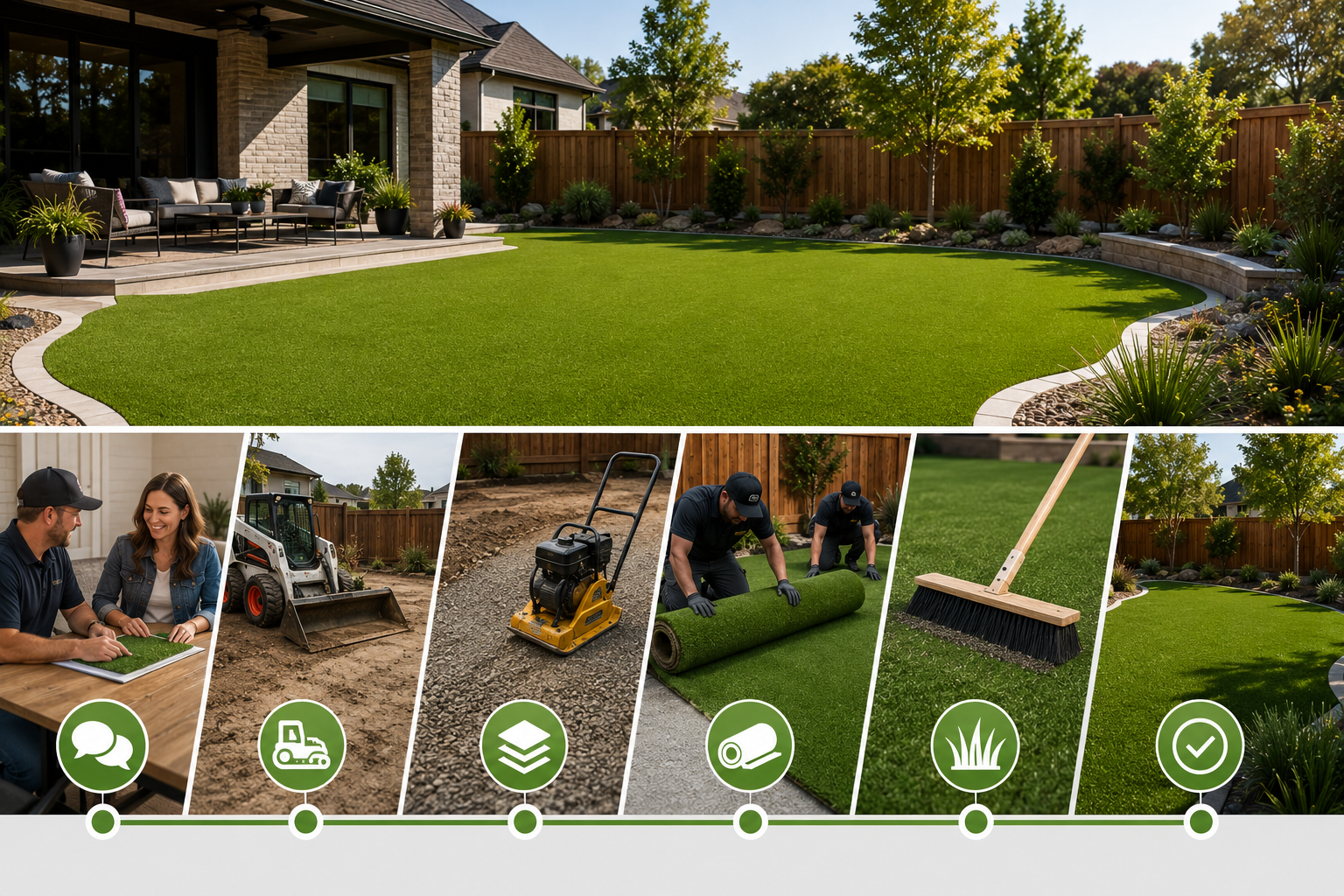
Artificial grass offers Dallas–Fort Worth homeowners both visual enhancement and practical performance. Clear knowledge of the installation timeline reduces uncertainty and supports effective planning. This overview explains each phase, typical timeframes, and the factors that influence scheduling, while highlighting how timely installation preserves property value and what care is required to extend the lawn’s service life. That context helps homeowners make informed decisions and secure a durable, functional outdoor space.
The typical timeline for artificial grass installation in the Dallas–Fort Worth area involves several key phases, each with its own timeframe:
The installation proceeds in distinct stages, each important to the final result. For comprehensive details on our services, explore our approach to artificial grass.
- Initial Consultation: A thorough site examination and initial consultation typically take 1-2 hours. During this phase, homeowners can discuss their vision and goals.
- Site Preparation: This phase usually spans 1-3 days, depending on the site’s existing conditions, including grading and soil type.
- Turf Installation: Laying down the synthetic turf often takes about 1-2 days for an average-sized yard, allowing for precise fitting and adjustments.
- Final Walkthrough and Adjustments: The finishing phase, lasting around half a day, ensures that everything meets quality standards and the homeowner’s expectations.
Overall, the project typically completes within 1–2 weeks from consultation to handover, subject to crew availability and site-specific conditions.
What Is the Typical Synthetic Turf Installation Process in Dallas–Fort Worth?
Synthetic turf installation in Dallas–Fort Worth follows a methodical sequence to deliver durable, high-quality results. The initial consultation assesses the site and determines appropriate turf options and layout. Site preparation can include the removal of existing vegetation, grading, and drainage improvements. When the base is prepared, installers fit and secure the turf with careful alignment and finishing. A final walkthrough confirms that the installation meets specifications and homeowner expectations. Each step is required to achieve a long-lasting lawn that enhances property value.
How Long Does Each Installation Phase Usually Take?
Timelines vary with site conditions and weather, but generally follow the schedule below:
- Consultation: 1-2 hours
- Site Preparation: 1-3 days
- Turf Installation: 1-2 days
- Final Walkthrough: 0.5 days
Clear timelines help homeowners plan and minimize disruptions during the installation process.
What Factors Influence the Duration of Artificial Grass Installation in Dallas?
Duration depends on site conditions, weather, and the selected turf type. For homeowners planning enhanced outdoor amenities, consider the advantages of adding custom putting greens as part of the overall landscape plan.
- Site Conditions: Complications like rocky soil or existing vegetation can extend the time needed for site preparation.
- Weather Conditions: Rain or extreme temperatures can hinder installation, causing delays.
- Material Choices: Different turf varieties and infill materials may require specialized installation methods, which can affect installation time.
Effective scheduling and experienced crews reduce the likelihood of delays and help keep the project on schedule.
In What Ways Do Surface Conditions and Synthetic Turf Types Affect Installation Time?
Surface traits and turf selection directly influence installation time. For example:
- Soil Type: Sandy or rocky soils require additional preparation and may lengthen the installation phase.
- Existing Landscaping: If the area has extensive vegetation or hardscaping, these elements must be removed, adding time to the project.
- Turf Type: Heavier or specialized turf types may require more care and installation time than standard types.
Accounting for these elements during material selection and site assessment reduces unexpected work and helps maintain the project timeline.
What Are the Benefits of Timely Artificial Grass Installation for Homeowners?
Prompt installation delivers concrete benefits for homeowners, including:
- Cost Savings: Early installation can prevent price increases in materials and labor due to seasonal demands.
- Increased Property Value: A newly installed lawn enhances curb appeal and can raise property valuations.
- Aesthetic Improvements: The sooner the turf is installed, the sooner homeowners can enjoy a lush, green lawn without worrying about maintenance.
Efficient execution allows homeowners to realize these advantages sooner and with fewer disruptions.
Contacting Synthetic Grass DFW connects homeowners with experienced installers who ensure timely completion and quality assurance.
Why Is Efficient Installation Key to Maximizing Return on Investment?
Efficient installation maximizes return on investment for several reasons:
- Long-Term Financial Impacts: An efficiently installed lawn minimizes future maintenance costs, contributing to ongoing savings.
- Added Property Value: Homes with well-maintained artificial lawns tend to sell for higher prices in the competitive Dallas–Fort Worth market.
- Maintenance Cost Elimination: With no need for watering, mowing, or fertilizers, the ongoing costs associated with natural grass are significantly reduced.
A timely, well-executed installation establishes long-term savings and performance, ensuring the lawn delivers sustained value.
What Post-Installation Care Should Dallas–Fort Worth Homeowners Expect?
Once installation is complete, follow clear care procedures to maintain appearance and maximize lifespan.
Post-Installation Artificial Grass Care
Material selection, installation techniques, and post-installation maintenance are key components.
The Florida Meadow Manual: Creating and Maintaining Resilient Green Spaces, GDJ LaPierre, 2026
Key maintenance practices include:
- Initial Care: After the lawn is installed, avoid heavy foot traffic for the first 24-48 hours to allow it to settle.
- Cleaning Intervals: Regularly remove debris and rinse the turf to avoid the build-up of dirt and maintain freshness.
- Seasonal Upkeep: Inspect for wear and perform minor repairs as needed throughout the season.
Adhering to these maintenance practices preserves the lawn’s appearance and extends its service life.
How Soon Can You Use Your Lawn Fully After Installation?
Homeowners can use their artificial lawn almost immediately. Light foot traffic is typically acceptable after about 24 hours, allowing families and pets to enjoy the space long before natural grass would be established.
How Does Synthetic Grass DFW Guarantee Quality and Efficiency in Installation?
Synthetic Grass DFW ensures quality and efficiency through the following measures:
- Expert Knowledge Application: Skilled professionals bring extensive experience and knowledge to each project, ensuring precision in installation.
- Quality Materials Used: Only top-grade synthetic products are used, enhancing the durability and aesthetic of each lawn.
- Structured Professional Process: Utilizing a systematic approach to the installation process ensures that every step is executed efficiently, minimizing time and maximizing quality.
This approach delivers durable, low-maintenance lawns that protect homeowners’ investment.
How Does Transparent Communication Improve Installation Scheduling?
Clear, timely communication improves scheduling by keeping homeowners informed, preventing misunderstandings, and aligning expectations. Regular updates enable prompt responses to concerns while maintaining project momentum.
What Should Homeowners Know About the Cost and Budget When Planning Artificial Lawn Installation in Dallas–Fort Worth?
Budgeting requires understanding cost drivers and the long-term savings that artificial turf can deliver.
Artificial Turf Installation Costs vs. Natural Grass
Artificial turf typically has higher initial installation costs compared with natural grass, though lifecycle savings should be considered when comparing options. Playing surface and injury risk: Artificial turf vs. natural grass, 1966
Homeowners should consider:
- Price per Square Foot: The total investment for installation depends on the specific turf product selected and the unique complexity of the project site, with final estimates influenced by current local market conditions.
- Long-Term Savings Breakdown: Savings on water, maintenance, and seasonal upkeep should factor into overall budgeting to highlight long-term ROI.
- Variations Based on Turf Type: More advanced or specialized turf types often come with higher costs but can deliver enhanced durability and performance.
Understanding these cost components allows homeowners to develop a realistic budget and schedule for their installation project.
How Can Homeowners Request Accurate Quotes and Schedule Installations?
To obtain accurate quotes, homeowners should follow these steps:
- Contact Methods: Reach out by phone or email for direct communication with installation specialists.
- Information to Provide: Be prepared to share details about your lawn size, desired turf type, and any existing conditions that may influence installation.
- Scheduling Efficiency Tips: To expedite the process, prospective clients should have essential information readily available and be flexible with scheduling options.
This preparation speeds the quoting process and contributes to a smoother installation, enabling homeowners to enjoy their new lawn sooner.
Frequently Asked Questions
What are the common mistakes homeowners make during artificial grass installation?
Common mistakes include inadequate site preparation, which can cause drainage failures; selecting an unsuitable turf for the intended use; and failing to adapt landscape plans for the new surface. Neglecting post-installation care also shortens the turf’s lifespan. These errors increase costs and reduce satisfaction, so professional planning and execution are advisable.
How does the climate in Dallas–Fort Worth affect artificial grass options?
Dallas–Fort Worth’s hot summers and mild winters require turf that resists high temperatures and UV exposure. Select products engineered for heat and sunlight resilience, and consult installation experts to choose materials suited to local conditions and long-term performance.
How can homeowners maintain their artificial grass over time?
Maintenance is straightforward: brush fibers to keep them upright, remove debris regularly, and rinse periodically to prevent odors and dirt buildup. Conduct routine inspections for wear and perform minor repairs as needed. For households with pets, use recommended pet-friendly cleaners to maintain hygiene and appearance.
Can synthetic turf be installed over existing grass?
Installing over existing grass is technically possible, but generally not recommended. Proper installation requires removing vegetation to create a stable, well-draining base; leaving the original grass in place can compromise durability and drainage. Clearing and leveling the area before installation produces the best long-term results.
What should homeowners do if their artificial grass gets damaged?
Assess damage promptly. Minor issues—small tears or loose seams—can often be repaired with specialized adhesive or seam tape. Extensive rips or significant discoloration may require section replacement. Consult installation professionals for effective repairs that restore appearance and function.
When is the best time to install artificial grass in Dallas–Fort Worth?
The optimal installation windows are spring and fall, when temperatures are moderate and ground conditions are more favorable. These seasons reduce installation stress on materials and can improve scheduling availability and cost efficiency.
Conclusion
Dallas–Fort Worth homeowners can gain reliable, low-maintenance outdoor spaces through an efficient artificial grass installation process. Understanding the timeline and procedures clarifies the long-term value of premium materials and professional installation. Contact our team for tailored guidance and accurate quotes to begin your project and improve your property’s appearance and functionality.


