Why Some Artificial Turf Lasts 20 Years or More While Others Wear Out Sooner

Artificial turf lifespans vary widely: some installations remain serviceable for 20 years or more, while others deteriorate much sooner. The difference stems from material selection, installation quality, maintenance routines, and local environmental conditions. For homeowners and businesses, understanding these factors helps ensure an installation that delivers long-term value, lower lifecycle costs, and consistent appearance. This article examines the key drivers of turf durability—fiber types, backing quality, UV resistance, infill choices—and explains how professional installation and proper maintenance influence overall lifespan.
Beyond individual product attributes, longevity is a systems outcome. That means the material properties, the way the turf is seated on the subbase, how water is managed, and the care it receives over time all interact. Focusing on a single element (for example, fiber type) without attention to installation and maintenance often produces disappointing results. Conversely, when each component aligns with the site’s conditions and use, the surface will sustain appearance and function for many years.
Durability Factors
Several elements determine how long artificial turf will perform as intended. Material quality is primary: higher-grade fibers and backings resist wear better. Installation quality is equally important; an improper base or poor drainage accelerates failure. Environmental exposure and usage patterns—intense sunlight, heavy foot traffic, or extreme temperatures—also affect longevity. Evaluating all these variables together provides a realistic expectation of performance.
Durability should be evaluated in context. For example, a product rated for heavy-use athletic applications may outlast a softer, more natural-looking residential product if both are used in the opposite environment. Assess the expected intensity of use (child play, pets, sports, or decorative use), local climate stresses, and available maintenance resources before selecting materials.
To illustrate these factors, we present a comparison of fiber types and their durability in the table below:
| Fiber Type | Durability | Description |
|---|---|---|
| Polyethylene | Moderate | Commonly used for residential lawns, it offers a natural appearance |
| Polypropylene | Low | Generally less durable, more suitable for temporary installations or low-traffic areas. |
Knowing these material characteristics enables informed choices that match intended use. Selecting the correct fiber type for traffic levels and exposure is the first step in securing long-term performance.
When comparing options, request sample swatches and ask suppliers about long-term performance testing such as abrasion resistance, UV exposure, and backing tensile strength. Observing installed projects of similar size and use in climates like yours provides practical insight beyond laboratory data.
Maintenance Practices
Consistent maintenance preserves both appearance and structural performance. Routine cleaning removes debris that can abrade fibers or trap moisture. Periodic professional inspections identify seam issues, infill displacement, or drainage concerns before they worsen. Managing infill levels maintains footing and prevents premature fiber collapse.
Effective maintenance practices can include:
- Regular Debris Removal: Sweeping or blowing away leaves and dirt can help maintain turf aesthetics and functionality.
- Professional Inspections: Engaging experts to assess turf conditions can prolong usage and prevent hidden damage.
- Infill Management: Monitoring and replenishing infill levels helps ensure the turf maintains its structural integrity and cushioning effects.
Adopting these routines reduces wear and extends usable life, protecting the initial investment and preserving warranty coverage where applicable.
Expand routine care into a simple schedule that matches your climate and use patterns. For many homeowners, a seasonal sweep and visual inspection combined with a yearly or biennial professional check will identify issues early. High-use or commercial sites typically benefit from more frequent inspections, periodic power brushing to lift compressed fibers, and scheduled top-ups of infill where necessary. When pets use the area, add targeted cleaning for hygiene and odor control.
Choose turf-friendly maintenance tools, such as soft-bristled brushes and leaf blowers on low settings, instead of stiff metal rakes that may damage the surface. Avoid harsh chemicals or petroleum-based products directly on fibers unless the manufacturer explicitly permits them. Always follow supplier guidance to avoid inadvertently voiding warranties.
Long-Term Value Considerations
Durable artificial turf often delivers superior long-term value versus natural grass. Although upfront costs can be higher, reduced landscape maintenance, lower water use, and the elimination of routine chemical applications produce measurable savings over time. When materials and installation meet expected standards, turf retains its appearance and performance with minimal ongoing expense.
Some key long-term benefits of quality turf include:
- Cost Savings: Over time, maintenance costs and the absence of water bills can lead to a favorable return on investment.
- Aesthetic Consistency: Artificial turf can retain its vibrant color and appearance without the need for pesticides or herbicides.
- Environmental Impact: By reducing water usage, artificial grass installations contribute to more sustainable landscaping practices.
These advantages underscore why selecting premium materials and qualified installers typically yields the best financial and aesthetic outcomes over the life of the product.
When assessing long-term value, consider the total cost of ownership rather than only the initial price. Total cost includes installation quality, expected maintenance routines, periodic infill replenishment, potential repairs, and the likely service life before replacement. A higher initial investment in durable components and professional installation can lower lifecycle cost and reduce the frequency and expense of interventions.
Resale and curb appeal are additional dimensions of value. Well-installed, well-maintained turf can support consistent property presentation in neighborhoods or commercial settings where appearance matters. For commercial owners, predictable surface performance reduces downtime and helps protect brand image.
What Are the Key Fiber Materials That Influence Artificial Turf Longevity?
The fiber composition of turf greatly affects durability and suitability for different uses. Common options include polyethylene for a natural look and durability, and polypropylene for lower-use installations. Matching the fiber type to the intended application is essential for achieving optimal performance and longevity.
- Polyethylene: This is often used for residential applications for its natural appearance and feel. However, it typically offers moderate durability.
- Polypropylene: Generally regarded as less durable, this fiber is used for budget-friendly options. It is more prone to wear and thus not recommended for high-use areas.
Beyond raw polymer type, manufacturers vary fiber construction. Blade shape, cross-section, and surface texture influence how fibers reflect light, shed debris, and resist matting. Some products use a blend of fiber types or mixed fiber geometries to balance appearance and toughness. When comparing products, examine close-up samples and ask how fiber shape and density contribute to the product’s intended use.
In some installations where both comfort and durability are needed, specifiers select a mixed approach: a more resilient fiber in high-traffic zones and softer polyethylene in decorative areas. Discussing anticipated usage patterns with suppliers can yield a tailored specification that meets both performance and appearance goals.
What Role Does Fiber Construction and Density Play in Turf Wear and Tear?
Fiber construction and density determine resistance to matting and visible wear. Higher denier and greater stitch density increase structural strength and reduce the risk of flattening. Low-density systems are more prone to early declines in aesthetics and performance, so density should align with traffic expectations.
Density also affects comfort and drainage. Very dense systems can feel firmer underfoot and may require carefully specified infill and underlayment to maintain shock absorption and drainage. Work with manufacturers to balance density, pile height, and infill strategies for the intended use.
How Does Turf Backing and Structural Integrity Affect Artificial Grass Durability?
The backing provides the structural foundation for the turf, holding fibers in place and supporting drainage. A robust backing system resists delamination and maintains dimensional stability under repeated use and environmental stress.
Backing failures can be costly and often manifest after several years of service if lower-grade materials were used or if drainage and installation were inadequate. When assessing products, inspect the backing for multilayer construction, adequate drainage, and compatibility with adhesives and seam tapes used by professional installers.
What Are the Characteristics of High-Quality Turf Backing Materials?
High-quality backings typically use multi-layer construction with materials chosen for tensile strength and water management. These backings preserve dimensional stability, facilitate drainage, and resist premature degradation that would otherwise require repairs or replacement.
Manufacturers may use woven or non-woven layers, combined with coating systems that securely bond the fibers. Backings that integrate drainage pathways reduce water retention and the risk of microbial growth in the subbase, thereby preserving the installed surface’s stability and function.
How Does Backing Influence Drainage and Turf Stability Over Time?
An effective backing design promotes consistent drainage through perforations or permeable layers, preventing water accumulation that can undermine stability. Proper drainage reduces substrate movement and helps maintain a level, safe surface over the long term.
Designers should evaluate site-specific hydrology and select backing and underlayment solutions accordingly. In areas prone to heavy rainfall or poor natural drainage, incorporating additional engineered drainage layers or specifying a more permeable backing can avoid standing water and the problems that follow.
Why Is UV Resistance Critical for Extending Artificial Turf Lifespan?
UV exposure accelerates polymer breakdown, leading to brittleness and color loss. Turf products that include UV stabilizers and have been tested for UV resistance retain their mechanical properties and appearance for longer, preserving functionality in sun-exposed locations.
Consider the site’s orientation and typical solar exposure when evaluating UV protection needs. South- and west-facing lawns in high-sun climates need stronger UV stabilization than shaded or temperate locations. Ask suppliers for evidence of UV testing and how the product performed in accelerated weathering assessments.
How Does UV Exposure Deteriorate Synthetic Grass Fibers?
Ultraviolet radiation degrades polymer chains, reducing fiber strength and flexibility and causing color fading. Over time, this process increases the likelihood of fiber loss and reduced performance if UV resistance is not specified.
Minor color change is normal over long service lives; the key distinction is whether the change coincides with structural weakness or increased brittleness. Products designed for long service lives combine UV stabilizers with polymer formulations that resist embrittlement so the fibers retain both color and mechanical integrity.
What Innovative UV Protection Technologies Are Used in Premium Turf?
Premium turf incorporates UV stabilizers in the polymer, reflective infill options, and surface coatings that reduce heat and slow degradation. These features mitigate sun damage and help maintain appearance and structural integrity.
Designers sometimes pair UV-resistant fibers with reflective or cooling infill materials to moderate surface temperatures in hot climates. While cooling strategies do not prevent UV exposure, lowering surface heat can reduce thermal stress on fibers and backing systems.
What Are the Effects of Different Infill Types on Artificial Turf Wear Resistance?
Infill selection affects shock absorption, fiber support, and wear characteristics. The right infill maintains blade uprightness, distributes loads, and contributes to the surface’s resilience under repeated use.
Consider how infill interacts with fiber type and density when choosing a system. Some fibers depend on a particular infill profile to perform as intended; changing infill without recalculating fiber-infill balance can alter playability and longevity.
How Do Rubber, Sand, and Organic Infill Materials Compare in Durability?
Rubber infill offers strong shock absorption and long-term resilience, making it common in sports and heavy-use areas. Sand infill provides stability and helps protect fibers from compression while preserving a natural feel. Organic infill can improve odor control and environmental profile but may require different upkeep.
Each infill type has trade-offs: rubber tends to retain cushioning but may migrate over time and require containment strategies; sand stabilizes but can compact and alter surface firmness; organic infill can decompose slowly and may require more frequent replenishment. Selecting infill should be guided by intended use, maintenance capacity, and environmental preferences.
Which Infill Types Enhance Turf Performance in High-Traffic or Pet Areas?
Select infill based on use: durable rubber or mixed systems suit high-traffic and athletic areas for shock absorption, while specific organic or antimicrobial infill is appropriate where odor control and pet hygiene are priorities. Correct infill application supports longevity and user comfort.
In pet areas, consider infill that promotes rapid drainage and resists trapping odors. For multi-use landscapes that combine aesthetic zones with play areas, designers often specify a hybrid infill strategy: stabilizing sand or silica in decorative sections, with rubber or mixed infill in zones expected to experience the most impact and wear.
How Does Installation Quality Influence the Longevity of Artificial Landscape Surfaces?
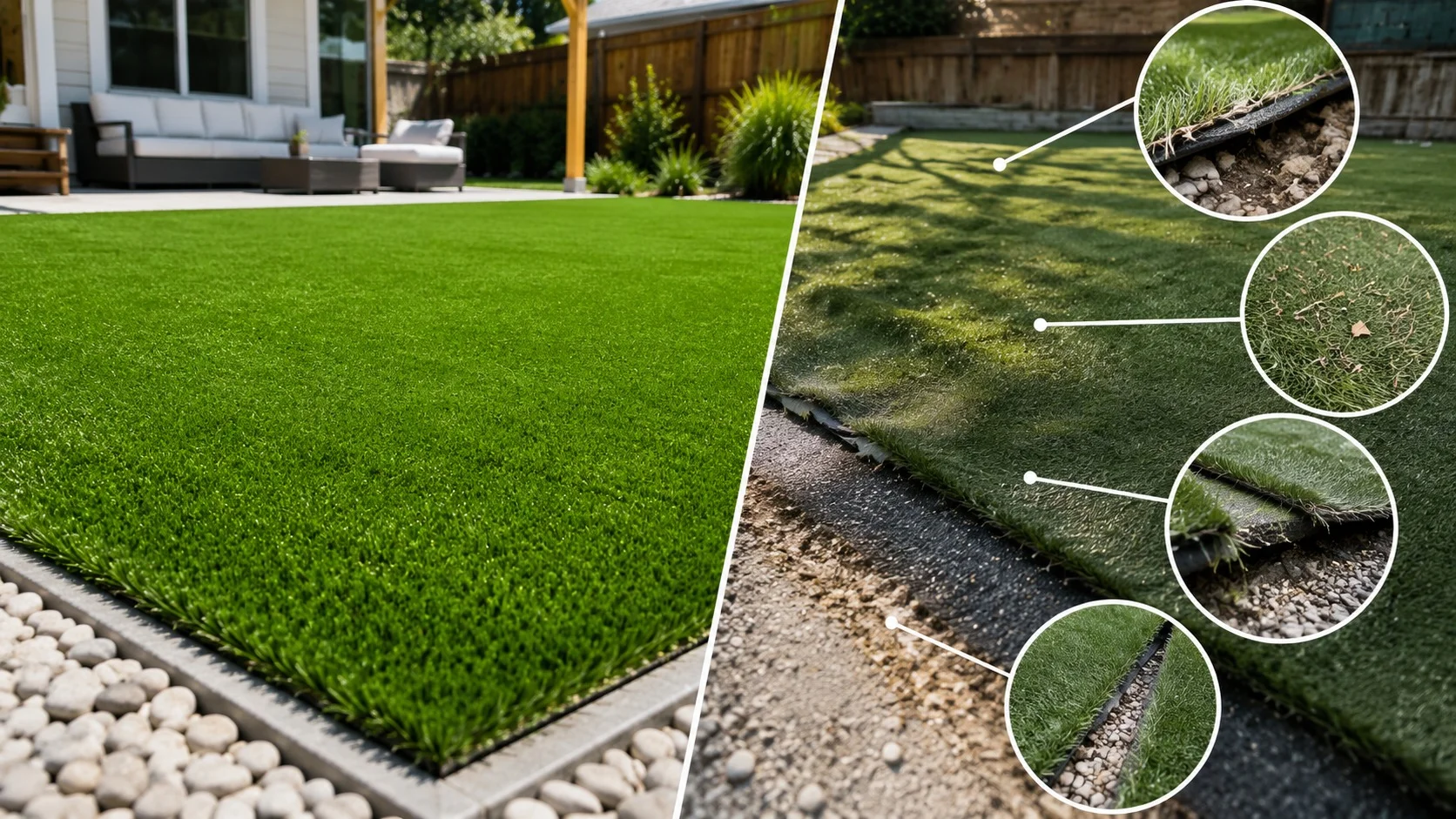
Installation quality is a decisive factor in turf lifespan. Proper base preparation, compaction, grading, and drainage installation create a stable platform that prevents settlement and seam failure. Adherence to manufacturer guidelines during installation protects performance and warranty eligibility.
A well-built base provides consistent support, reduces localized settlement, and ensures that seams are not subjected to excessive movement. Edge restraints and proper anchoring prevent lifting at borders. Inadequate compaction, inconsistent slopes, or poor seam preparation are common causes of premature failure, often visible only after the surface has been in service for some time.
What Installation Practices Ensure Maximum Turf Durability and Stability?
Durability depends on a prepared, well-compacted base, correct slope and grading for water runoff, and a drainage plan suited to site conditions. Following manufacturer specifications for seam bonding and anchoring reduces the risk of premature issues.
Other best practices include using geotextile separators where needed to prevent subgrade contamination, verifying compaction using appropriate field methods, and allowing adhesives and seams to cure under the recommended conditions. Attention to these details reduces long-term maintenance needs and preserves warranty coverage.
Why Is Professional Installation a Vital Investment for Long-Lasting Turf?
Professional installers bring experience, specialized tools, and process control that reduce installation errors and ensure design intent is met. Skilled crews follow best practices that protect the turf’s structural integrity and help achieve the expected turf lifespan.
Hiring experienced contractors also provides a documented installation record that many manufacturers require to keep warranties valid. A professional installation often includes pre-installation site evaluation, appropriate material staging, and post-installation inspections to confirm drainage and seam integrity.
What Are the Best Maintenance Practices to Prolong Artificial Turf Life?
Routine maintenance preserves function and appearance: clear debris, check seams and infill, and schedule periodic professional assessments. Consistent care prevents small issues from becoming costly failures.
Develop a maintenance plan that communicates responsibilities and timing, whether managed by the homeowner, facility manager, or a service contractor. The plan should note when to sweep, when to inspect seams, how to address stains or spills, and when to call a professional for repairs or infill redistribution.
How Do Warranties and Manufacturer Guarantees Reflect Turf Quality and Lifespan?
Warranties signal manufacturer confidence and offer a baseline expectation for product performance. Longer, clearly defined warranties generally reflect higher-quality materials and controlled manufacturing processes; review exclusions and maintenance requirements closely to understand coverage.
Read warranty documents carefully. Many warranties require documented maintenance and professional installation to remain in force. Understand the claim process, what evidence is needed for a warranty claim, and whether remediation is repair, replacement, or a prorated option.
What Warranty Features Signal a High-Quality Artificial Turf Investment?
Key warranty features to evaluate include the duration of coverage, whether the warranty covers UV degradation and fiber failure, and any performance guarantees tied to installation or maintenance. Clear transferability and documented claim procedures add buyer protection.
Also check whether the warranty covers the backing, drainage performance, and seam integrity. Some manufacturers provide separate coverage for different failure modes; others offer a single comprehensive warranty. Match coverage to the risks most relevant to your site and usage.
How Can Customers Use Warranties to Compare Artificial Turf Options?
Compare warranty length, scope, and conditions when evaluating products. Focus on documented coverage for wear, UV resistance, and backing integrity, and confirm whether professional installation or specific maintenance routines are required to maintain the warranty.
Warranties are a useful differentiator but not the only one. Evaluate warranties alongside independent performance testing, reference installations, and installer qualifications to form a complete view of expected longevity.
How to Compare Artificial Turf Quality: Long-Lasting vs. Shorter Life Products?
Distinguish premium from lower-grade turf by examining material specifications, backing construction, fiber density, UV testing, and warranty terms. Factor installation standards and anticipated maintenance into total cost of ownership to assess true value.
When in doubt, compile a side-by-side comparison of candidate products that lists fiber type, pile height, denier or fiber gauge, backing layers, drainage features, recommended infill, warranty terms, and documented field references. This approach clarifies trade-offs and helps match product attributes to site needs.
What Factors Differentiate Premium Turf from Lower-Grade Alternatives?
Premium turf features robust multi-layer backings, higher fiber density, proven UV stabilization, and controlled manufacturing tolerances. These elements reduce lifecycle costs and maintain performance longer than lower-grade alternatives.
Additionally, premium manufacturers provide technical documentation, accessible customer support, and installation training for contractors—factors that increase the likelihood of successful long-term performance in the field.
How Do Environmental Conditions and Usage Patterns Affect Turf Durability?
Climate and usage intensity determine which products and installation methods are appropriate. Hot, UV-intense regions require stronger UV protection; areas with heavy traffic need higher-density fibers and more resilient backings. Match product choice to local conditions and use cases for best results.
Consider microclimates and shading patterns across a single property. Areas that receive constant sun may benefit from a more robust specification than shaded sections receiving less stress. Similarly, paths and concentrated activity zones may require additional reinforcement or a different product than decorative or low-use zones.
In summary, the durability of extended artificial turf depends on selecting suitable materials, applying industry-standard installation practices, and maintaining the surface over time. When these elements align, turf delivers sustained appearance, functional performance, and a favorable lifecycle return on investment.
For a detailed review of artificial turf solutions, visit synthetic grass resources and service information. Choosing the right materials, installers, and maintenance plan up front helps ensure a long-lasting, attractive landscape. Specific services such as custom putting greens are documented for clients considering specialized applications.
Frequently Asked Questions
What maintenance routines should I follow to ensure my artificial turf lasts?
Maintain turf by regularly removing leaves and debris, brushing high-traffic areas to redistribute fibers and infill, and topping up infill as needed. Schedule professional inspections to check seams, drainage, and backing integrity, and address repairs promptly to prevent escalation.
In practice, develop a simple checklist: weekly visual checks during active seasons, monthly light cleaning for common debris, and a more thorough annual inspection and brushing session. Adjust the frequency based on use intensity and environmental loading, such as nearby trees shedding leaves or needles.
How does climate affect the longevity of artificial turf?
Climate affects material stress and UV exposure; extreme heat and high UV levels accelerate polymer aging, while freeze–thaw cycles can affect base stability. Select products with UV stabilization and design site-specific drainage to mitigate local environmental impacts.
Wind-driven debris, local salt exposure near coastal areas, and seasonal moisture patterns each change how a system should be detailed. Discuss local conditions with suppliers and installers so they can recommend appropriate combinations of backing, drainage, and infill.
What are the environmental benefits of choosing artificial turf?
Artificial turf reduces water use, lowers the need for pesticides and fertilizers, and cuts routine fuel consumption from mowing. When installed and maintained responsibly, turf can support sustainable landscaping goals while delivering consistent aesthetics.
Responsible installation also considers runoff management and the selection of infill materials that align with environmental priorities. Choosing recyclable materials and planning for end-of-life reuse or recycling are additional considerations for sustainability-minded projects.
How can I tell if my artificial turf requires replacement?
Replacement may be necessary when you observe persistent matting, significant fiber loss, widespread color fading, backing separation, or recurring drainage and stability issues.
Regular inspections help identify when repair is feasible versus when full replacement is the most economical option.
Minor localized issues often respond well to repair, seam re-bonding, or infill replenishment. Widespread structural deterioration of the backing or chronic drainage failure typically indicates the end of a product’s economically viable service life.
Are there specific infill types better suited for pet areas?
Pet areas benefit from infills that aid odor control and drainage; certain organic and antimicrobial infills reduce smells, while resilient rubber or mixed infills provide cushioning and durability. Select pet-safe infill products and follow cleaning protocols to maintain hygiene.
Regular rinsing, prompt removal of solid waste, and scheduled deodorizing (using manufacturer-approved products) help keep pet areas sanitary and extend the turf’s useful life in these demanding locations.
What role do warranties play in assessing artificial turf quality?
Warranties are a practical indicator of expected lifespan and manufacturer confidence. Compare coverage for fiber wear, UV degradation, and backing integrity, and verify conditions, such as requirements for professional installation or maintenance, to keep coverage valid.
Also confirm who is responsible for labor and material costs in the event of a covered failure, and whether the warranty is transferable if the property changes ownership.
How can installation affect the performance of artificial turf?
Proper installation ensures a stable base, correct drainage, and secure seams—factors that directly affect performance and longevity. Poor installation often leads to early failures; investing in qualified installers reduces long-term risk and supports warranty claims.
Ask potential contractors for references and examples of completed projects with similar conditions. A quality installer will provide documentation of site preparation, material choices, and post-install maintenance recommendations.
Conclusion
Investing in high-quality artificial turf can deliver lasting appearance, reduced maintenance demands, and a strong return on investment when materials, installation, and maintenance are properly aligned. Prioritize durable materials, expert installation, and a planned maintenance schedule to protect your landscape investment for years to come. Explore premium synthetic grass options to identify the best solution for your site and usage requirements.
In short, longevity is the product of considered choices and ongoing care. With the right specification, professional installation, and a realistic maintenance plan, artificial turf can meet or exceed expectations for decades while delivering predictable appearance and performance.