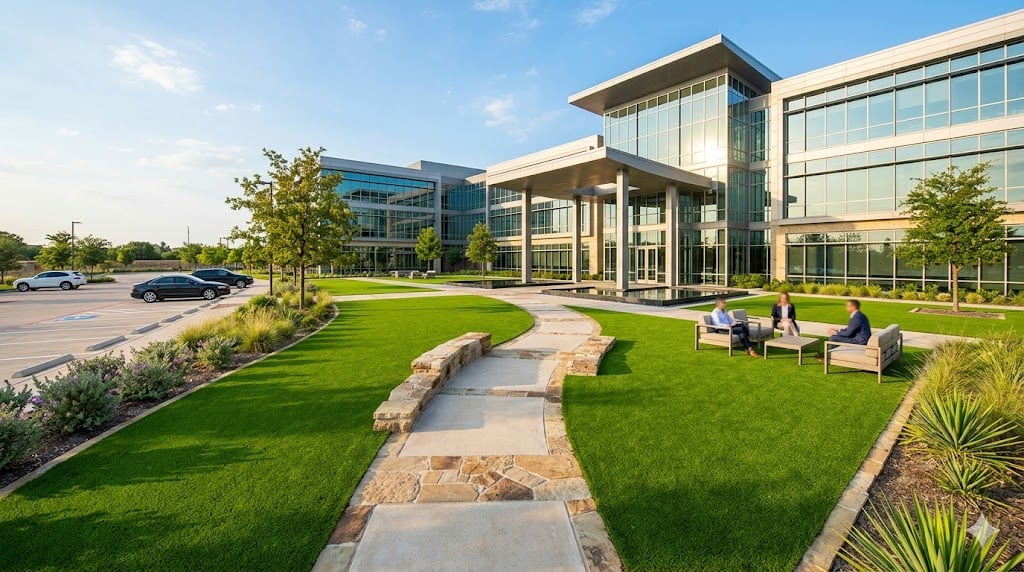
Upgrade Business Spaces with Low‑Maintenance Commercial Artificial Grass
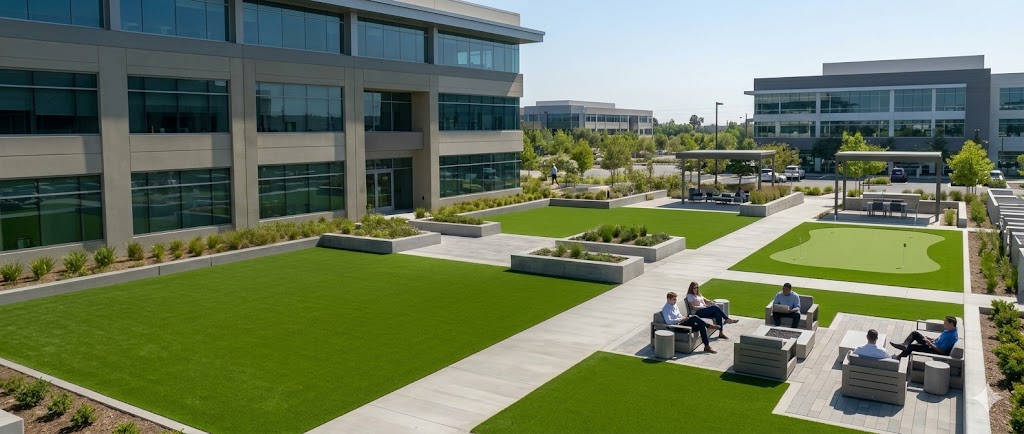
An inviting outdoor area matters. Low‑maintenance commercial artificial grass upgrades grounds without the ongoing work natural lawns require. This article summarizes the main benefits—lower upkeep costs, stronger curb appeal, and environmental advantages—and outlines installation and simple care tips to keep turf attractive with minimal effort.
What Are the Key Benefits of Artificial Grass for Businesses?
Artificial grass reduces maintenance expense and keeps landscapes consistently neat year‑round without routine mowing, irrigation, or fertilizing. That lowers labor and materials costs and frees staff to focus on business operations.
It also improves curb appeal: uniform color and texture create a polished first impression that supports branding. For businesses in the Dallas‑Fort Worth area, Synthetic Grass DFW provides commercial artificial grass solutions designed for durability, appearance, and easy upkeep.
How Does Low-Maintenance Landscaping Save Time and Costs?
Artificial turf cuts time spent on groundskeeping—no scheduled mowing or frequent watering—so you reduce contractor hours and recurring material expenses like fertilizer and pesticides. Over time, those savings make turf a practical investment for businesses seeking an attractive exterior with minimal ongoing costs.
In What Ways Does Durable Commercial Artificial Turf Enhance Business Curb Appeal?
Durable commercial artificial turf delivers a consistently vibrant landscape that welcomes customers and reflects well on your business. It can be specified in different textures and colors to match site needs and brand aesthetics.
The idea of synthetic turf reshaping outdoor aesthetics has a documented history and cultural impact worth noting.
AstroTurf: Redefining Aesthetics & Ecology with Synthetic Grass
This study traces AstroTurf’s rise in postwar North America as an example of “augmented nature”—a manufactured stand‑in for natural grass that reshaped suburban lawn standards and suggested technological fixes to ecological problems. By examining marketing choices, including the product’s display at Montreal’s Expo ’67, the paper shows how synthetic turf helped redefine public ideas about nature, domestic green spaces, and the role of materials in shaping aesthetics.
Plastic Grass, Suburban Dreams: AstroTurf and the Idea of Augmented Nature, 2025
Applications include play areas, event lawns, outdoor seating, and courtyards—spaces that benefit from low upkeep and consistent appearance. Properly installed turf encourages foot traffic and customer use without constant maintenance.
How Is Commercial Synthetic Turf Installed in Dallas‑Fort Worth Business Spaces?
Installation follows a methodical process: an initial consultation to assess site conditions and choose the right product, followed by site prep, turf placement, and finishing to ensure drainage and a seamless look.
Projects vary by size but are often completed within 1–2 weeks, covering surface removal or preparation, placement of a drainage base, seam work, and infill and grading for durability.
What Is the Typical Installation Process and Timeline?
The typical installation process for commercial synthetic turf includes several core steps:
- Site Assessment: Evaluate the area and recommend turf type and layout.
- Ground Preparation: Remove existing surfaces as needed, level the ground, and install a drainage base.
- Turf Installation: Lay the turf, secure seams, and finish edges.
- Finishing Touches: Add infill and final grading to ensure proper drainage and a polished look.
This sequence yields a durable, attractive surface that performs for years with minimal upkeep.
Which Customized Solutions Are Available for Office Landscaping?
Options include various pile heights, leaf textures, and color blends to match your design goals. Integrations—walking paths, seating clusters, planters, or decorative accents—create functional outdoor spaces for employees and visitors while requiring minimal maintenance.
How Does Artificial Grass Support Environmental and Water Conservation Goals?
Artificial grass drastically reduces irrigation needs, which is valuable in drought‑sensitive areas. It also eliminates routine pesticide and fertilizer use, benefiting local ecosystems. Many modern turf products include recycled materials, further reducing environmental impact.
A recent study reinforces these ecological benefits, showing how synthetic turf can be both a cost‑saving and environmentally conscious choice for businesses.
Artificial Grass: Sustainable Business Solution for Cost Savings & Environment
This article evaluates artificial grass as an environmentally focused business solution amid rising resource constraints. It highlights water savings, lower operating costs, and environmental safety while discussing market growth and applications—sports facilities, urban landscaping, and public spaces—based on industrial experience in Uzbekistan. The study argues that synthetic turf can address resource challenges and open new economic opportunities.
What Are the Water Savings and Sustainability Advantages?
Switching to artificial grass can save substantial water—often thousands of gallons annually—by eliminating the need for regular irrigation. That lowers bills and supports local conservation efforts.
Choosing turf with recycled content and long service life further reduces the landscape’s carbon footprint and aligns with customer expectations for sustainable business practices.
How Does Synthetic Turf Contribute to Eco‑Friendly Commercial Landscaping?
Synthetic turf reduces chemical use, cuts water consumption, and lowers fuel use from maintenance equipment. Its longevity also means less frequent replacement and reduced waste over time. Installing turf lets businesses demonstrate visible sustainability while maintaining a durable landscape.
What Maintenance Tips Ensure The Longevity of Commercial Synthetic Turf?
Keep turf performing and looking good with straightforward maintenance: regularly remove leaves and debris to protect drainage, avoid driving heavy machinery on the surface, and inspect seams and infill periodically.
How Can Businesses Minimize Upkeep for Synthetic Grass?
Simple tasks preserve appearance and performance: occasional brushing to lift fibers, spot cleaning when needed, and scheduled inspections to catch wear early so repairs stay small and affordable.
What Are Common Maintenance Practices for Durable Artificial Turf?
Common practices include:
- Regular Cleaning: Remove leaves, dirt, and debris to keep the surface functional.
- Brushing: Fluff fibers periodically to prevent matting and restore texture.
- Inspection: Check seams, infill levels, and drainage to identify and fix issues promptly.
These steps help synthetic grass remain attractive and serviceable for years.
Frequently Asked Questions
What types of businesses benefit most from artificial grass?
Businesses needing low‑maintenance landscaping—restaurants with outdoor seating, retail storefronts, office courtyards, recreational facilities, and high‑traffic sites—benefit most, especially in drought‑prone areas.
Is artificial grass safe for children and pets?
Yes. Quality turf is made from non‑toxic materials, many of which have shock‑absorbing properties for play areas. Surfaces are easy to clean and suitable for family‑friendly settings.
How does artificial grass perform in extreme weather conditions?
Synthetic turf withstands heat, cold, and heavy rain without turning to mud. UV‑stabilized products resist fading, so landscapes remain attractive year‑round.
Can artificial grass be installed over existing surfaces?
Often yes—over concrete, asphalt, or compacted soil—speeding upgrades and reducing excavation. Proper drainage planning is essential; consult a professional installer for the best approach.
What is the lifespan of commercial artificial grass?
Commercial turf typically lasts 15–20 years depending, on quality and maintenance. Premium products intended for heavy use resist wear longer; routine care extends usable life.
Are there any environmental concerns associated with artificial grass?
Production uses plastics, which raises environmental concerns. Many manufacturers include recycled materials and offer recycling programs for old turf; choose products with sustainable features and clear end‑of‑life plans to minimize impact.
Conclusion
Low‑maintenance commercial artificial grass delivers measurable benefits—reduced upkeep costs, improved curb appeal, and water savings—while creating inviting outdoor spaces that require little ongoing effort. Installation is straightforward, and simple maintenance keeps the turf looking great. Contact us to learn how tailored solutions can transform your commercial property.