
How to Decide on the Right Backyard Putting Green Size
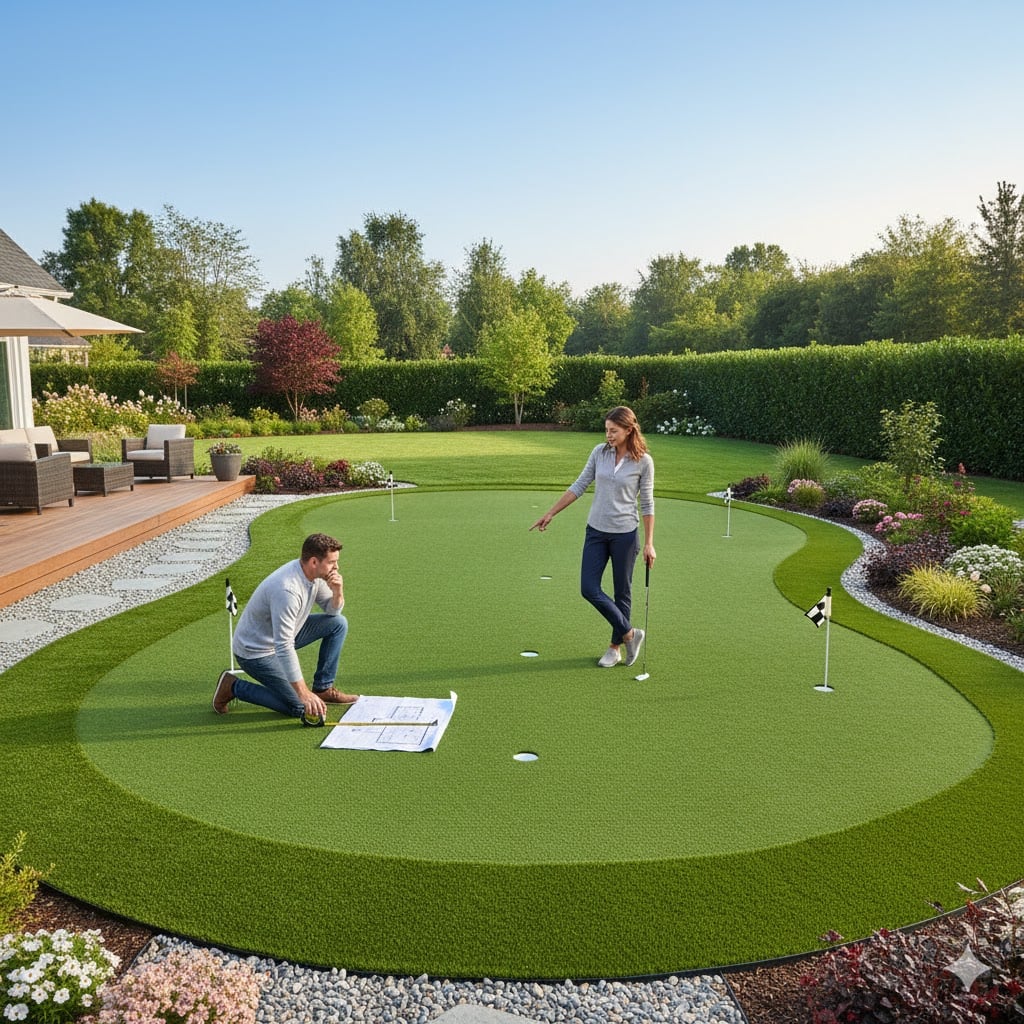
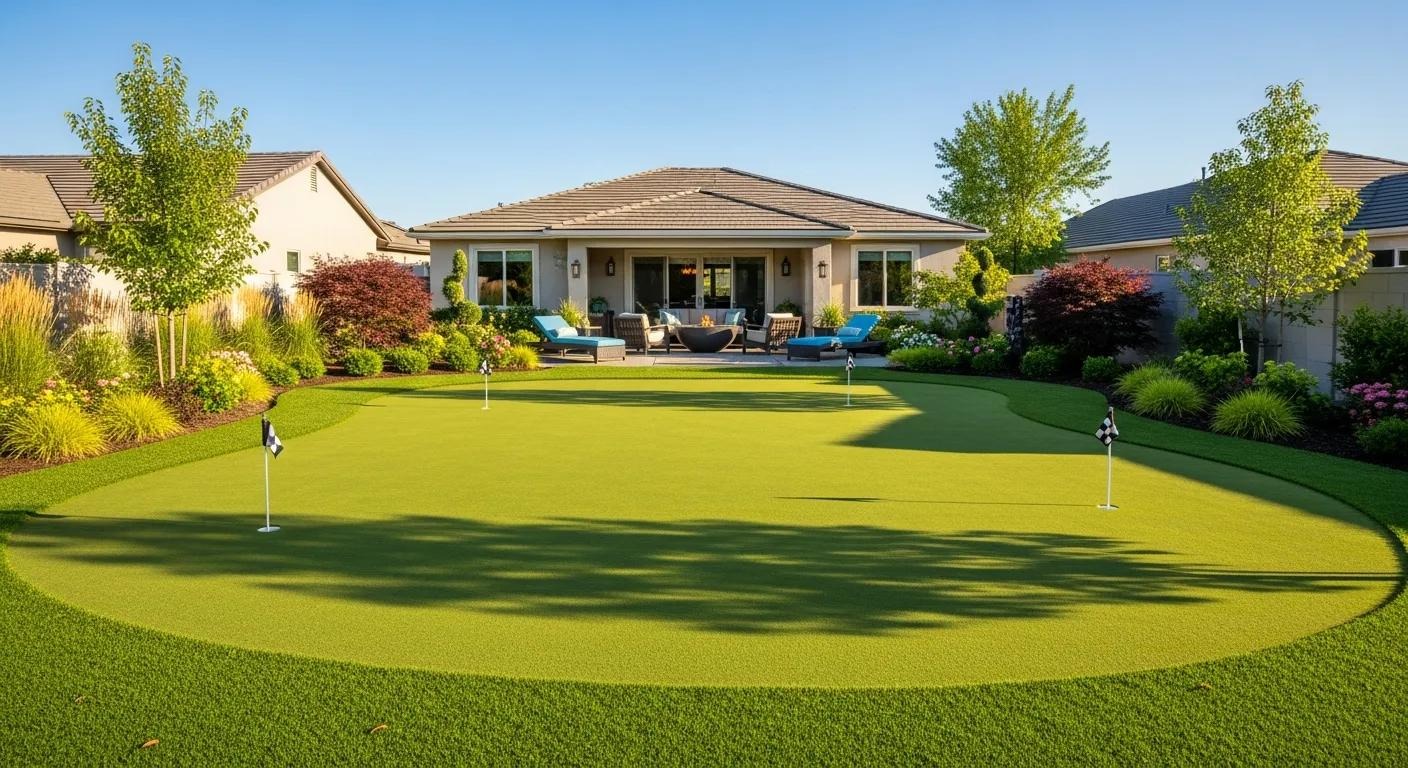
Picking the right backyard putting green size is about more than square footage — it’s about matching how you want to practice, how the green fits your yard, and what fits your budget. This guide walks you through measuring usable space, matching dimensions to your skill level and intended use, spotting design choices that change the footprint, and estimating costs for small, medium, and large residential greens. Size determines how many drills you can run, whether you can add chipping or multiple hole locations, and how the green ties into landscaping and entertainment areas. In DFW, many homeowners work around tight lots, HOA rules, or sloped yards; this article lays out practical steps, common size ranges, cost drivers, and local tips so you can plan with confidence. Keep reading for a measurement checklist, comparative size tables, a breakdown of cost drivers, and a simple step-by-step process to prepare for a free design consultation.
Why Backyard Putting Green Size Matters
Size directly affects practice value, how the green looks in your yard, ongoing upkeep, and even the feature’s contribution to property appeal. The right dimensions let you practice realistic putts and short chips while keeping circulation and landscape balance. Too small limits drill variety and hole placement; too large can overwhelm the yard and increase prep costs. Knowing these trade-offs helps you pick a green that supports your goals without sacrificing outdoor living space or creating unnecessary maintenance.
After weighing benefits and trade-offs, many homeowners want a local partner to turn size decisions into buildable plans and accurate quotes. Synthetic Grass DFW installs custom artificial putting greens across the DFW area and offers free consultations to help you match size and features to your site and budget. With local experience and USA-made turf options, a consultation clarifies how size affects playability, drainage, and long-term care before you lock in dimensions.
Benefits of Choosing the Right Putting Green Dimensions

Right-sized greens maximize practice value while fitting your landscape and budget. A properly scaled green supports realistic putting distances and multiple hole options, helping your short game without taking over yard functions. The right size also allows useful elements — fringes, gentle slopes, chipping areas — that add practice variety and a natural look, making the green more inviting for family and guests. Artificial turf sized correctly also cuts watering and mowing needs compared with natural grass, delivering long-term maintenance savings and a consistent playing surface.
Balancing features and footprint preserves landscape flow so the green looks intentional, not just an add-on. That balance improves curb appeal and makes outdoor gatherings more enjoyable — both things that add value to many neighborhood properties. Knowing how size maps to benefits makes it easier to prioritize the features that matter most to you.
How Size Affects Practice Versatility and Aesthetics
Size sets the range of drills you can run, the number of hole placements, and how slopes can simulate real-course reads. Small greens are great for short putts and alignment practice; medium greens let you work varied breaks and multi-hole sessions; large greens support chipping, contours, and longer simulated approaches. Visually, compact greens can be framed with planting and paving for a built-in look, while larger greens need careful transitions and borders to stay in scale with the yard.
Adding features like a fringe or a small chipping pad boosts practice options without a huge footprint — but they still require extra square footage and grading. Clarify your practice objectives first so you can decide whether to dedicate space to slope-driven challenge areas or keep the green simpler and more social.
Key Factors That Influence Your Backyard Putting Green Size
The main factors that determine ideal size are usable space, skill level and practice goals, desired features (holes, fringe, chipping), budget, and local rules or topography. Each factor adjusts how much area you need and what trade-offs are realistic for your yard. Looking at them together produces a size that balances playability with landscape function and site limits.
Use this practical checklist to evaluate sizing influences before sketching a plan.
- Measure usable backyard area precisely and note obstructions like trees and utilities.
- Decide how often and what drills you’ll run (short putts vs. multi-target sessions).
- List must-have features (fringe, chipping pad, multiple holes) and nice-to-haves.
- Set a budget range and decide if you want a phased build or an all-in installation.
Working through these items prepares you for the measurement steps ahead and helps structure a consultation request that produces realistic quotes and design options.
How to Measure Available Backyard Space for Your Putting Green
Start with a simple perimeter sketch and follow a few practical measuring steps to create a clear site plan. Use a tape measure or laser tool to record the backyard’s overall dimensions, then mark zones unsuitable for building (large trees, steep slopes, septic or utilities). Measure gate widths and access paths so installation equipment can reach the site. Take photos from multiple angles and note drainage patterns to share with your installer.
| Area | Measurement Step | Why it matters |
|---|---|---|
| Overall yard footprint | Measure length and width of backyard perimeter | Establishes maximum potential area for a green |
| Unbuildable zones | Mark trees, utility easements, patios, and pools | Prevents planning over restricted areas and avoids costly rework |
| Access and equipment clearance | Measure gate widths and path heights | Ensures installation equipment can reach the site without damage |
| Slope and drainage | Note changes in elevation and direction of runoff | Informs grading and drainage design to protect turf performance |
Careful measuring cuts surprises during planning and gives your design partner the info needed to produce accurate layouts and costs.
How Golf Skill Level and Practice Goals Affect Size Decisions
Your skill and how often you’ll practice strongly influence recommended square footage and features. Beginners who want short-putt practice and warm-ups can do well with compact greens that focus on a few hole placements and consistent roll. Casual players who entertain and practice occasionally benefit from medium greens with multiple hole options and a small fringe. Serious amateurs and short-course enthusiasts typically choose larger or custom greens with chipping areas, varied slopes, and multi-hole routing.
- Beginner/Casual: 150–300 sq ft — short putt accuracy and alignment.
- Family/Enthusiast: 300–500 sq ft — multiple hole placements and social play.
- Serious Practice: 500+ sq ft — chipping areas, contours, and multi-hole designs.
Matching skill level to size helps you prioritize features and avoid overbuilding or underserving your practice needs.
Design Features to Consider When Planning Size

Elements like slopes, fringe, chipping pads, hole count, and perimeter borders each add footprint and affect installation complexity. For example, a 6–8 ft chipping area can add roughly 50–100 sq ft; moderate breaks and slopes increase grading and base-layer needs. Decide which features are essential versus optional to guide size and cost choices. Shape matters too: elongated greens work well in tight yards, while rounded greens slot into larger landscape rooms.
- Slopes and breaks: subtle grading is typical; steep contours need extra base prep.
- Fringe and collars: add perimeter turf and edge detailing that increase installed area.
- Chipping pads and bunkers: add visual interest and additional footprint.
- Hole count and placement: more holes increase design complexity and spacing needs.
Balancing desired features with available space and budget yields a green that plays well and looks integrated with your landscape.
Common Backyard Putting Green Sizes and Their Uses
Residential putting greens generally fall into three size categories — small, medium, and large/custom — each suited to different uses and yard types. The table below shows recommended square footage, best use cases, and typical features for each category.
| Size Category | Recommended Square Footage | Best Use Cases | Typical Features |
|---|---|---|---|
| Small putting green | 150–300 sq ft | Tight yards, practice nooks, warm-ups | Single hole, basic fringe, minimal grading |
| Medium putting green | 300–500 sq ft | Families, entertainers, serious amateurs | Multiple holes, moderate slopes, small chipping pad |
| Large/custom green | 500–1500+ sq ft | Dedicated practice zones, multi-feature designs | Multiple holes, varied slopes, chipping areas, drainage systems |
Use this comparison to see how square footage maps to function and design complexity, helping you pick a size class that fits your priorities.
What Makes Small Putting Greens a Good Choice?
Small greens (about 150–300 sq ft) are ideal for narrow or compact yards where efficient use of space is key. They support short putts, alignment work, and casual family play without major landscape disruption. Typical small layouts feature a single hole, a modest fringe, and a properly prepared base to ensure consistent roll. Small greens are more budget-friendly and can often be added to existing patios or lawn replacements with minimal grading.
When space is tight, designers use shape and orientation to maximize putting runs — narrow rectangles or curved strips can simulate longer putts without needing a wide footprint. Small greens also make a sensible first phase for homeowners who want to expand later.
How Medium Putting Greens Balance Space and Function
Medium greens (300–500 sq ft) strike a balance between practice options and manageable installation scope, making them popular in many DFW neighborhoods. These sizes fit multiple hole placements and modest slopes, letting golfers practice a wider range of putts. Typical medium designs include a narrow fringe, one or two alternate hole locations, and sometimes a small chipping pad for short approaches.
Medium greens work well for families who want both play and pleasing aesthetics, as they integrate with patios, firepits, and walkways without overwhelming the yard. They need moderate grading and base work but remain more affordable than full custom builds.
When to Choose Large or Custom Putting Green Sizes
Large or custom greens (500–1500+ sq ft) are right for homeowners who want more than putting — think chipping, pitching, and multi-hole short courses. These builds support complex contours, multiple targets, and features like bunkers or detailed border landscaping, but they also require more extensive grading, drainage planning, and base construction. If you want a dedicated short-game area or a landscape centerpiece that plays like a course, a large green delivers unmatched versatility.
Because large installs involve higher site-prep costs and longer timelines, talk with a local installer early to identify site constraints and any infrastructure work needed.
How Budget Affects Size and Features
Budget shapes decisions about square footage, turf quality, base prep, and optional features. Major cost items include size (sq ft), turf grade (pile height, infill, backing), site preparation (grading, compaction, drainage), and add-ons like chipping pads or contours. Smaller greens lower material and labor costs but may limit features; larger greens increase installation and site-prep expenses while offering more practice options.
The table below links common cost drivers to typical impacts and illustrative cost expectations to help set realistic budgets before you request a quote.
| Cost Driver | Typical Impact | Cost Range (illustrative) |
|---|---|---|
| Size (sq ft) | Primary cost multiplier | Small: lower; Large: higher |
| Turf quality | Affects durability and playability | Moderate to premium depending on turf |
| Site preparation | Grading, drainage, base layers | Can significantly increase overall cost |
| Features/add-ons | Chipping areas, slopes, bunkers | Adds discrete feature costs |
This breakdown helps you weigh upfront installation costs against long-term maintenance savings and play value.
Typical Installation Costs by Putting Green Size
Exact prices vary by site conditions and materials, but cost sensitivity follows a pattern: small greens cost less overall, medium greens add turf and grading costs, and large greens bring significantly higher site-prep and drainage expenses. Instead of relying on generic price ranges, request a free consultation for an estimate tailored to your yard and chosen features. A local installer will evaluate access, slope, and soil conditions that materially affect pricing.
When budgeting, include a contingency for additional grading or drainage work — these measures protect turf performance and reduce future maintenance. For DFW homeowners, asking about USA-made turf options during consultation clarifies long-term performance and warranty trade-offs.
How Maintenance Changes with Size and Complexity
Artificial putting greens need less upkeep than natural grass, but maintenance still scales with size and features. Routine tasks include debris removal, brushing infill, occasional top-ups, and checking drainage. Larger or multi-feature greens require more frequent inspections for wear at high-traffic holes and more time for grooming. Complex slopes and features can slightly increase upkeep time, but synthetic surfaces eliminate mowing, fertilizing, and irrigation associated with natural turf.
- Routine tasks: debris clearing, brushing, spot cleaning
- Frequency: weekly to monthly depending on use and yard debris
- Long-term: occasional professional touch-ups or infill replacement may be needed
Knowing maintenance trade-offs helps you decide whether higher upfront costs are worth reduced long-term care.
How Property Layout and Local DFW Rules Affect Putting Green Size
Your property’s shape, slope, and access often limit feasible green layouts or suggest creative approaches that maximize usable area. Narrow, irregular, or sloped yards may call for linear greens or terraced chipping pads. Drainage direction and nearby landscaping should influence placement so runoff doesn’t affect adjacent areas. Assessing these factors early prevents costly redesigns and ensures year-round performance.
DFW HOA guidelines and city codes can affect visibility, turf appearance standards, or permits for grading and drainage. Confirming these rules before finalizing size avoids compliance issues. When uncertain, consult a local installer familiar with neighborhood practices and compliant design approaches.
Yard Shapes and Topographies That Influence Size Options
Different yard shapes call for different strategies: narrow lots benefit from elongated greens for linear putting runs; wide yards can support oval or kidney shapes for multiple hole placements. Sloped sites may need terracing or engineered grading to create playable contours and manage runoff. Tight access — narrow gates, side yards, or low clearances — can affect equipment staging and may increase time or cost if special handling is required.
Designers use retaining edges, planting buffers, and pavers to transition between the green and surrounding landscape when space is limited. Early topography assessment tells you whether a desired size is practical and which grading measures are needed.
DFW HOA or City Rules That May Limit Putting Green Dimensions
HOAs and cities commonly regulate visible lawn changes, drainage modifications, and use of synthetic turf in front yards. Homeowners should review HOA design guidelines for turf appearance and front-yard limits, check city codes for permits tied to grading or drainage, and confirm utility easements that may restrict construction. If questions come up, a local installer can advise on neighborhood norms and help prepare documentation for HOA review.
Bringing a DFW installer into the process early streamlines compliance: they can recommend subtle design choices that meet aesthetic rules while preserving playability and can document drainage solutions to satisfy municipal concerns.
How to Start Designing Your Backyard Putting Green in DFW
Begin by measuring, setting practice goals, choosing desired features, and requesting a professional consultation to turn those decisions into a build plan. Preparing photos, a rough sketch with dimensions, a prioritized feature list, and any HOA rules speeds the consultation and yields more accurate proposals. This approach keeps design options realistic for your site and budget and makes phased builds possible.
Use this step-by-step checklist to move from idea to an actionable quote efficiently.
- Measure and sketch your yard with usable areas and obstructions marked.
- Define practice goals and must-have features (holes, chipping, slopes).
- Gather photos and HOA or city rule documents if applicable.
- Set a budget range and decide whether to phase features.
- Request a professional consultation to review options and receive a free quote.
Following these steps reduces back-and-forth during planning and helps your installer present options that match both site realities and your practice goals.
Steps to Plan and Customize Your Putting Green Size
Planning is straightforward: measure the site, prioritize features, sketch layout options, set budget expectations, and consult a local installer for design refinement. Use the measurement table earlier to capture essential site details, then sketch your preferred shape and access points. Rank features as must-haves versus nice-to-haves so cost estimates can be phased. Finally, review turf and base-layer options during consultation to balance playability and longevity.
Preparing this information before your consultation produces more precise design options and a smoother installation timeline.
How to Request a Free Quote and Consultation from Synthetic Grass DFW
When you’re ready for a professional review and a free quote, include key details so we can respond quickly. Send measured dimensions or a sketch, photos showing access and slope, a list of desired features, and any HOA guidance you have. Expect the consultation to include a site review (virtual or onsite), a discussion of USA-made turf options that balance roll and durability, and clear phased or full-installation choices. For homeowners in the Dallas–Fort Worth area, Synthetic Grass DFW delivers custom artificial putting green installation and free consultations to translate your size and feature priorities into buildable plans.
Attach the measurement checklist and photos to speed our reply and make sure the proposal addresses both playability and site constraints. The consultation usually yields layout options and a ballpark cost range tailored to your yard and goals.
Frequently Asked Questions
What maintenance is required for a backyard putting green?
Routine maintenance includes debris removal, brushing the surface to keep infill distributed, and checking drainage. Artificial greens need less work than natural turf, but larger or more complex designs require more frequent inspections and grooming. Plan for occasional infill top-ups and periodic professional touch-ups to keep roll consistent. Regular care preserves playability and extends the life of the green.
How can I ensure my putting green integrates well with my landscaping?
Blend the green with natural borders like flower beds, decorative stone, or pavers to create smooth transitions. Match colors and materials to your existing landscape and consider fringes or chipping areas for visual interest and function. A landscape designer or your installer can help create a cohesive look that enhances the yard while keeping the green practical.
What are the best practices for measuring my backyard for a putting green?
Start with a perimeter sketch and note obstructions like trees, utility lines, or steep slopes. Use a tape measure or laser tool for accurate dimensions, and measure access paths for installation equipment. Document drainage patterns and elevation changes, and take photos from several angles. These details matter to design and grading decisions.
Can I install a putting green myself, or should I hire a professional?
Some homeowners opt for DIY installs, but professional installation is often the smarter route. Pros handle site preparation, drainage, and turf selection to ensure a durable, playable surface. They also navigate local rules and HOA requirements and avoid common mistakes like improper grading that lead to costly repairs. Investing in a pro usually pays off in longevity and performance.
What are common mistakes to avoid when planning a putting green?
Common errors include underestimating needed space, ignoring drainage, and picking a size based on looks rather than function. Homeowners sometimes choose features that look good but don’t support their practice goals. Also, overlooking HOA or city rules can create compliance headaches. Prioritize playability and consult professionals to avoid these pitfalls.
How does the choice of turf affect the performance of a putting green?
Turf choice heavily influences ball roll, durability, and maintenance. Pile height, infill material, and backing quality all matter. Higher-quality turf delivers a more realistic roll and longer life but costs more upfront. Choose turf that matches your practice goals and DFW climate, and consult a turf specialist to pick the best option for your green.
Conclusion
Choosing the right size for your backyard putting green improves practice options and enhances your outdoor space. By weighing space, goals, features, and budget — and by checking local rules — you can pick a size that feels intentional and performs well. Ready to move forward? Request a free consultation with the Synthetic Grass DFW team and let us help you design a putting green that fits your yard and playing style.


