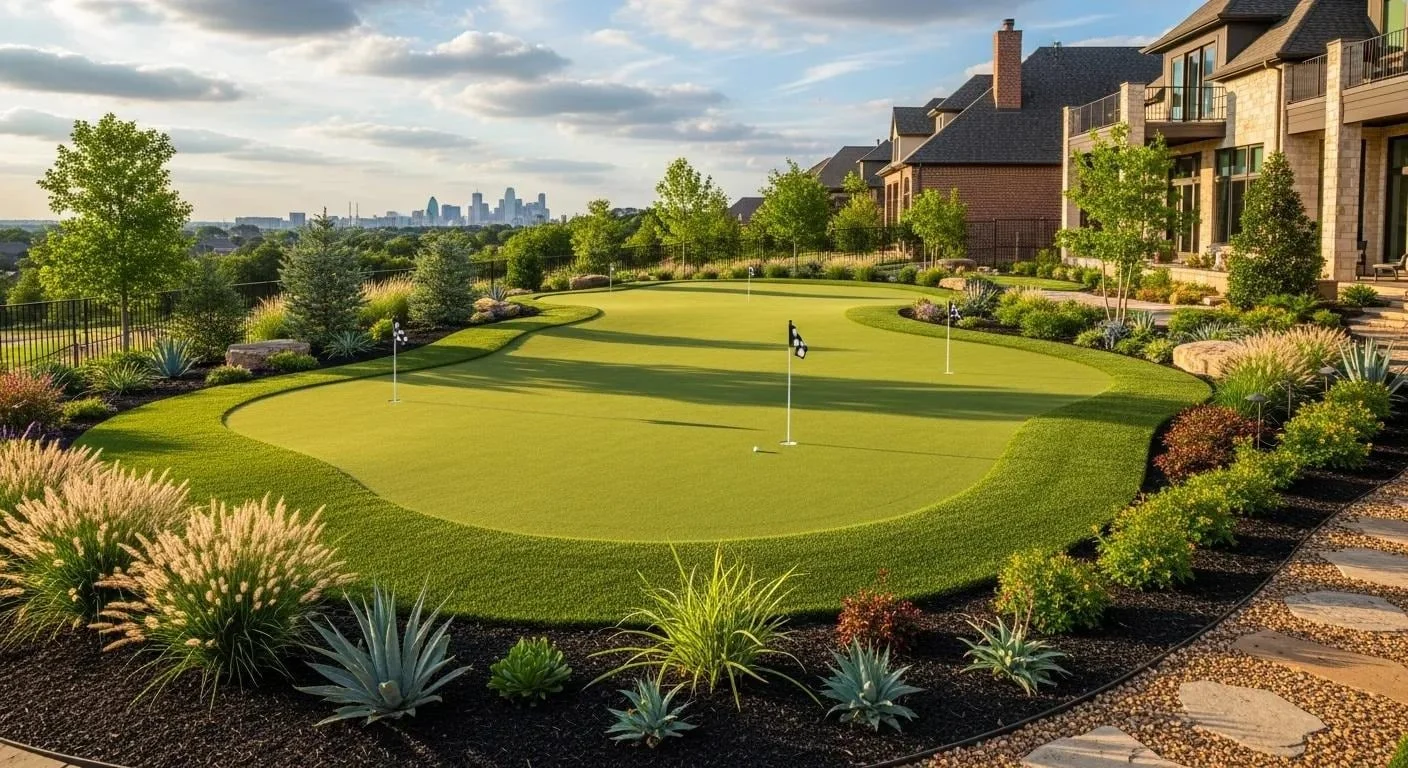
Does Heat Affect Putting Green Speed in Dallas?

Summer in Dallas brings blazing temperatures that change how natural greens play. Knowing what heat does to real grass — and how artificial putting greens respond — helps golfers keep a consistent stroke all year. This guide walks through how heat influences green speed, why synthetic turf can deliver steadier ball roll, what to consider when installing greens for DFW weather, and simple maintenance tips to preserve speed during the hottest months. We’ll also explain why many local players choose Synthetic Grass DFW for heat-ready putting surfaces.
How Does Dallas Heat Impact Natural Putting Green Speed?
The intense summer heat in Dallas puts stress on natural putting greens and changes how the ball rolls. As grass struggles under high temperatures, surfaces can slow down or become uneven — which makes putting less predictable for golfers trying to keep their game sharp.
What Causes Inconsistent Ball Roll on Natural Greens in Summer?
Several heat-driven issues make summer ball roll less reliable on natural greens:
- Moisture Evaporation: Hot, dry air speeds up evaporation, leaving turf drier and slower than usual.
- Grass Type: Some turf varieties stand up to heat better than others; species choice affects summer performance.
- Maintenance Practices: Inconsistent watering, mowing height, or recovery time can create uneven surfaces that change speed.
Together, these factors produce a variable putting surface — so knowing how to manage heat effects is key for dependable play.
Why Does Grass Stress Affect Putting Green Speed in Dallas?
Heat stress changes grass physiology, and that directly alters green speed:
- Physiological Responses: Under extreme heat, grass can go dormant or slow its growth, which reduces recovery and smoothness.
- Comparison with Artificial Turf: Synthetic greens don’t go dormant — they hold consistent speed across temperature swings.
- Long-term Implications: Repeated heat stress can damage turf health, creating patches and irregular rolsl that hurt play quality.
Recognizing these dynamics helps golfers and property owners make choices that keep putting performance steady through the summer.
What Are the Benefits of Artificial Putting Greens in Dallas Heat?
Artificial putting greens offer clear advantages in a hot climate like Dallas. They deliver more consistent play and cut the routine upkeep that natural grass demands when temperatures spike.
- Consistent Speed: Synthetic turf offers uniform ball roll, so your putting stroke stays predictable no matter how hot it gets.
- Low Maintenance Requirements: Artificial greens need far less watering and mowing, freeing up time and lowering upkeep costs.
- Durability in Extreme Weather: Quality turf is built to withstand heat and sun exposure, keeping performance steady throughout the seasons.
| Benefit | Description | Impact Level |
|---|---|---|
| Consistent Speed | Delivers steady ball roll across temperature changes | High |
| Low Maintenance | Less water, less mowing, fewer repairs compared to natural turf | Medium |
| Durability | Engineered to resist the sun and heat without rapid wear | High |
The practical advantages of artificial putting greens make them a smart choice for Dallas golfers, especially during long, hot summers.
How Does Synthetic Turf Maintain Consistent Putting Green Speed?
Synthetic putting greens are engineered for repeatable performance even when temperatures climb. Key contributors include:
- Material Properties: Turf fibers are selected and manufactured to mimic turf feel while withstanding heat and foot traffic.
- Infill Types: The right infill supports blade resilience, helps ball roll predictably, and can reduce surface heat.
- Performance Metrics: Manufacturers and installers test speed and consistency so the finished green meets players’ expectations.
Those design choices are why many golfers prefer synthetic surfaces for steady practice and play.
What Heat-Resistant Technologies Are Used in Artificial Turf for Golf?
Modern turf blends smart materials and additives to improve hot-weather performance. Common features include:
- Cooling Technologies: Special infills and cooling coatings can lower surface temperatures, making play more comfortable.
- UV Protection: UV-stable fibers resist fading and breakdown from prolonged sun exposure.
- Longevity Features: Reinforced backing and durable fibers extend the life of the green, so it keeps performing year after year.
These technologies keep artificial putting greens looking good and playing well, even under relentless sun.
How Is Artificial Putting Green Installation Customized for the Dallas Climate?
Installing a putting green in DFW needs local know-how. Thoughtful design and material choices ensure the green performs and lasts through hot summers and sudden storms.
What Design Options Optimize Putting Green Speed in Hot Weather?
To keep speed consistent in hot weather, designers focus on a few core elements:
- Shape and Contour: Proper contours ensure drainage and consistent roll, even after heavy summer rains.
- Material Selection: Choosing heat-tolerant fibers and infill makes the green more stable under extreme temperatures.
- Drainage Solutions: Effective base layers and drainage prevent pooling and protect surface integrity.
These design choices go a long way toward reliable performance in Dallas heat.
What Is the Installation Process for Artificial Putting Greens in DFW?
Installing a putting green in the Dallas–Fort Worth area usually follows three main steps:
- Initial Consultation and Design: We assess your space, how you play, and local site conditions before planning the layout.
- Preparation of the Site: Proper grading, base installation, and drainage prep set the foundation for lasting performance.
- Final Installation and Maintenance Tips: After the turf is installed, we fine-tune the surface and share simple care steps to preserve speed and appearance.
This methodical approach helps ensure your green meets both playability and climate needs.
How Can You Maintain Putting Green Speed During Texas Summers?
Keeping green speed steady through hot Texas months takes a little planning and a few routine maintenance steps.
What Cleaning and Cooling Practices Preserve Turf Performance?
Regular care keeps synthetic greens playing their best:
- Regular Cleaning Schedules: Remove leaves and debris, and occasionally brush the surface to keep the nap even.
- Cooling Methods: Light misting or specialized cooling infill can lower surface temperatures on peak-heat days.
- Importance of Infill Maintenance: Checking and topping up infill keeps the turf blades supported and ball roll consistent.
Simple, consistent maintenance extends life and preserves the playing characteristics you expect.
How Does Proper Infill and Care Extend Artificial Green Durability?
Infill plays a big role in how a green feels and lasts. Effective care includes:
- Types of Infill Materials: Choosing an infill designed for heat resistance and playability improves ball roll and comfort.
- Impact on Turf Durability: Correct infill levels support fibers and reduce premature wear.
- Maintenance Practices for Infill: Periodic top-ups and redistribution keep performance consistent season to season.
Following these practices protects your investment and ensures the green stays responsive during long summers.
Why Choose Synthetic Grass DFW for Heat-Resistant Putting Greens?
Picking the right installer matters. At Synthetic Grass DFW, we combine local experience with turf choices built for the Dallas climate.
What Makes Synthetic Grass DFW’s Products Ideal for Dallas Heat?
Our putting green solutions are designed with DFW summers in mind:
- Heat-Resistant Materials: We use fibers and infill that resist fading and perform well under high temperatures.
- Durability in Extreme Conditions: Our systems are built to handle heavy use and prolonged sun exposure without losing playability.
- Customer Satisfaction: Homeowners and golfers tell us the finished greens keep playing consistently and look great year after year.
Those qualities make Synthetic Grass DFW a dependable choice for residents seeking a heat-resistant putting surface.
How Can You Request a Free Quote for Your Putting Green Installation?
Getting a free quote is simple:
- Contact Methods Available: Reach out via phone or email to discuss your project and schedule a site visit.
- Information Needed for Quotes: Telling us the intended size, location, and how you plan to use the green helps us provide a quicker, more accurate estimate.
- Encouragement to Reach Out: Contact us to explore options — we’ll help you find the right solution for your space and budget.
That straightforward process helps golfers and homeowners move from idea to playable green with confidence.
Frequently Asked Questions
What are the key differences between natural and artificial putting greens in hot climates?
Natural greens are vulnerable to heat stress, which often translates to slower, less consistent ball roll as temperatures climb. Artificial putting greens, by contrast, offer consistent performance regardless of heat and require much less upkeep. While natural turf can suffer from drought and recover slowly, synthetic turf remains playable and predictable throughout Dallas’ hot months.
How can golfers adapt their playing techniques to account for heat-affected greens?
On heat-stressed natural greens, golfers often need to reduce stroke speed and focus on a smoother roll to compensate for slower surfaces. Practicing on an artificial green can help you dial in a repeatable stroke because the speed stays consistent. Also consider playing earlier or later in the day to avoid the hottest periods, and remember to stay hydrated so concentration and mechanics stay sharp.
What maintenance practices are essential for keeping artificial putting greens in top condition?
Keep the surface clear of debris, brush occasionally to maintain nap, and monitor infill levels. Lightly misting the turf on very hot days or using cooling infill options can improve comfort. Regular inspections for wear and quick repairs to seams and edges will also keep playability high and extend the green’s lifespan.
Are there specific types of infill that offer the Best heat resistance in artificial greens?
Certain infills perform better in heat. Rubber infill is durable and can help reduce retained heat, while silica sand helps improve drainage and stability. There are also advanced infill blends with cooling qualities that actively lower surface temperatures. Choosing the right infill depends on the desired ball roll, feel, and how often the green will be used.
What are the long-term benefits of investing in artificial putting greens for Dallas residents?
Artificial putting greens give Dallas homeowners consistent playing conditions year-round, reduce ongoing maintenance costs, and stand up better to heavy use and heat than natural turf. Over time, that reliability and lower upkeep translate to saved time and money, plus more frequent practice — all of which can help improve your game.
How do weather conditions influence the choice of materials for artificial putting greens?
Weather is a major factor in material selection. In hot, sunny climates like Dallas, choose UV-stable fibers and heat-resistant infill to avoid fading and excessive surface temperatures. Good drainage and a proper base are also essential to handle heavy summer storms. Selecting materials with the local climate in mind ensures the green stays attractive and functional.
Conclusion
Heat clearly affects natural putting green speed in Dallas — but artificial greens offer a reliable alternative. With the right materials, smart installation, and simple maintenance, synthetic putting surfaces deliver consistent ball roll, lower upkeep, and long-term durability through Texas summers. If you’re ready to upgrade your practice space or backyard, Synthetic Grass DFW can help design and install a putting green built for the DFW climate.